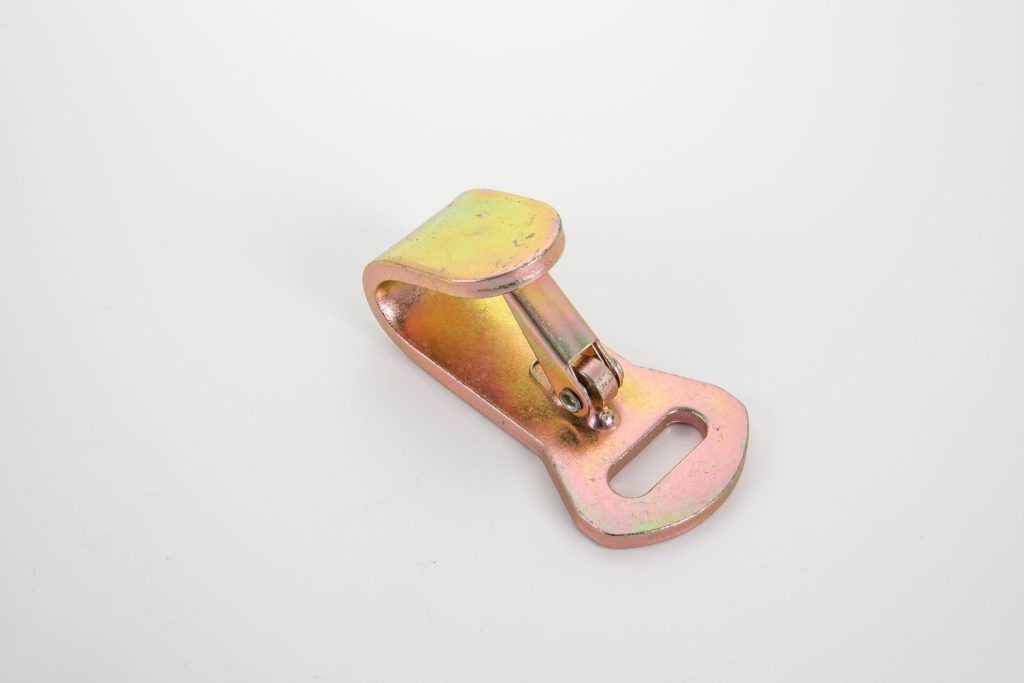
A flat hook is a high-strength end fitting used in cargo securement assemblies; it is formed from a single piece of square steel through stamping and bending into a low-profile J-shape. Its flat, slim geometry is specifically designed to fit into narrow openings—such as stake pockets and side rub rails on flatbed trailers—where standard round hooks cannot be used. It is an essential hardware component for securing heavy loads in trucking and cargo operations.
Key Takeaways
- Flat hooks are J‑profile steel end fittings purpose‑built for stake pockets and flatbed side rails.
- Manufactured from high‑strength steel, they deliver high breaking strength and evenly distribute tie‑down forces to reduce strap damage.
- Tool‑free installation: slide into anchor slots, attach webbing, and apply tension via ratchet or trailer winch.
- Proper size matching between hook and webbing width is critical for safe load restraint.
What Is a Flat Hook?
Flat Hook Design and Physical Characteristics
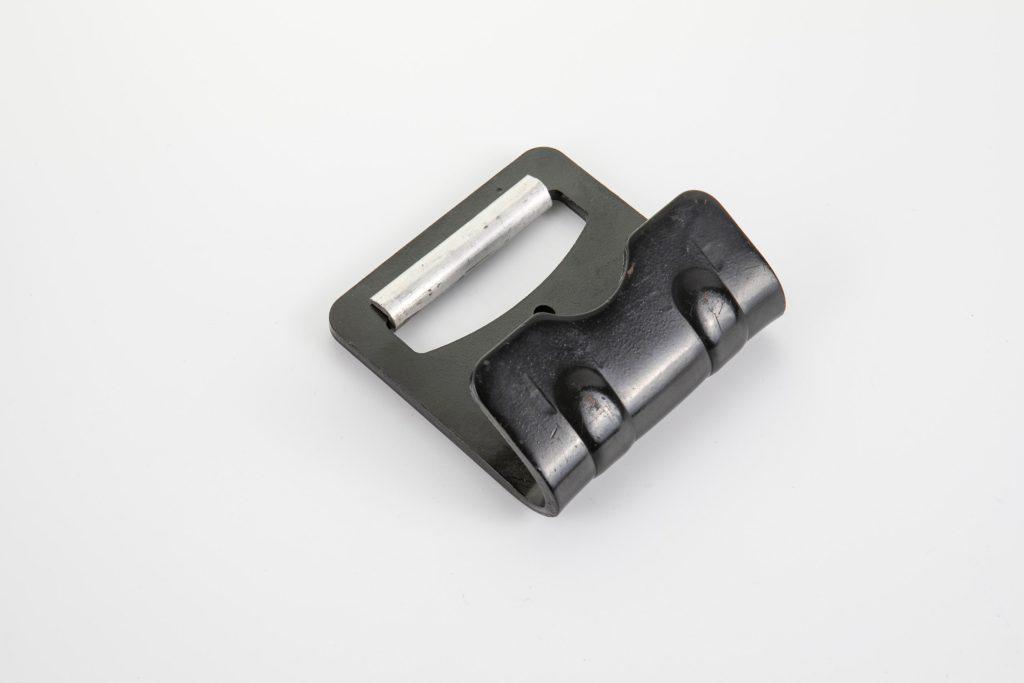
The flat hook is formed from a single piece of square steel stock, bent into an elongated “J” shape. Its flat cross-section allows it to fit into stake pockets or the narrow openings of rub rails on flatbed trailers—locations that typically cannot accommodate bulkier round hooks.
The base material is generally industrial-grade steel with a thickness of 3/16 inch. Manufacturers offer various material options, including high-strength carbon steel, alloy steel, and stainless steel. Surface treatments—such as hot-dip galvanizing and black electrophoretic coating—provide corrosion resistance against road salts, moisture, and daily wear and tear.
Flat hook specifications align with standard tie-down webbing widths; common market sizes include 1, 2, 3, and 4 inches. Breaking strengths range from 800 kg to 10,000 kg, meeting requirements for applications ranging from light-duty to heavy-duty transport.
An integrated wear guard is built into the “J” bend of the hook. This design increases the contact area between the hook and the webbing, distributing tension loads evenly and preventing sharp edges from cutting the strap. By eliminating localized stress concentration points, it extends the service life of both the hook hardware and the tie-down strap. Under tension, the flat hook sits flush against the mounting surface, minimizing slippage.
Limitations: Flat hooks rely on specific mounting slots or flat rail structures. They cannot be securely attached to round bars or in situations lacking suitable rail or stake pocket mounting points.
Operation with Winches and Ratchet Straps
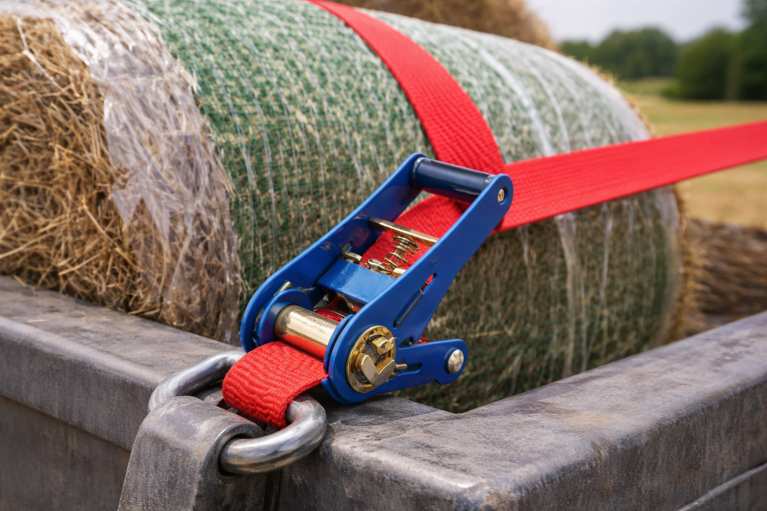
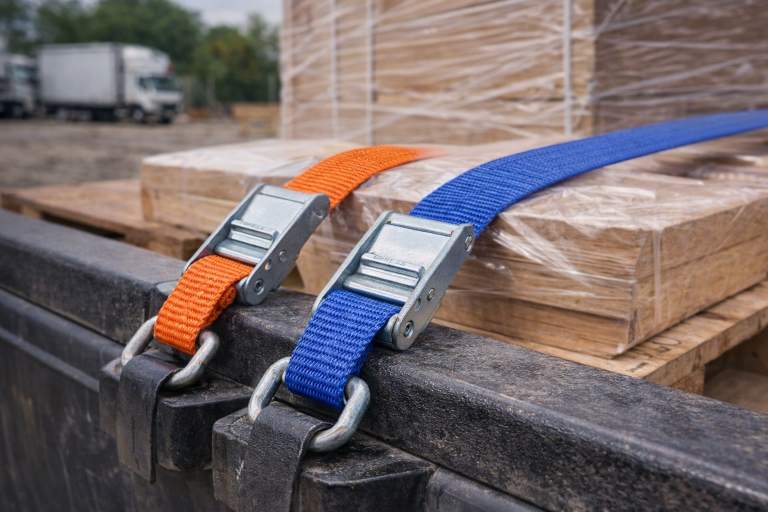
Flat hooks are typically permanently attached to tie-down webbing. In practice, the user inserts the hook into a trailer’s stake pocket or rub rail slot and then applies tension using a ratchet buckle or a trailer-mounted winch. This system is widely used on flatbed and gooseneck trailers to secure lumber, steel pipes, palletized cargo, and construction equipment. The following is a comparison of two main tensioning configurations:
| Tensioning Method | Tensioning Mechanism | Core Components | Operating Procedure |
|---|---|---|---|
| Ratchet Strap | Hand‑operated ratchet buckle | Webbing, ratchet assembly, flat hooks | Secure hooks to anchor points at both ends. Operate the ratchet handle to take up webbing slack. Internal gear‑and‑pawl geometry locks applied tension. |
| Winch Strap | Trailer‑mounted winch drum + winch bar | Webbing fitted with flat hook, steel winch drum, winch bar | Feed the strap tail through the trailer winch drum; seat the flat hook into its anchor. Turn the winch bar to wind webbing onto the drum and remove slack. |
With correct installation, the hook lies flat against the trailer structure. Load tension spreads across the hook body rather than concentrating on a small point, minimising strap abrasion and hook deformation.
Standard workflow:
- Seat one end’s flat hook into a stake pocket or rub‑rail anchor.
- Route the webbing across the cargo and thread the free end through ratchet or winch hardware.
- Crank the ratchet handle or winch bar to eliminate slack and achieve target tie‑down tension.
- Confirm positive locking before transit.
Simple, repeatable operation makes flat hooks standard hardware for professional truck drivers and equipment operators.
How to Select the Right Flat Hook
Typical Applications and Cargo Requirements
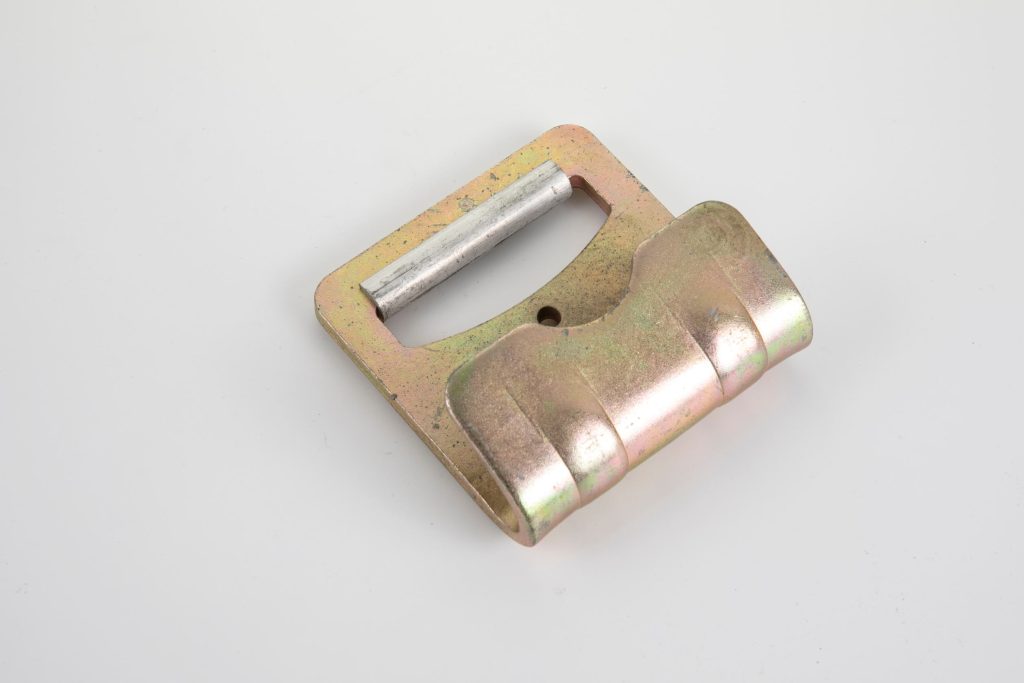
Flat hooks are ideally suited for securing heavy loads on flatbed trailers. Common items include backhoe loaders, mini-excavators, large generators, structural steel beams, and heavy construction machinery. Such high-value, heavy cargo demands tie-down hardware that offers consistent clamping force and exceptional structural strength.
For reference, many standard flat hooks feature a Working Load Limit (WLL) of 5,000 lbs and a minimum breaking strength of 15,000 lbs; this design accounts for the vibrations and shock loads encountered during transit while incorporating an appropriate safety factor.
Installation is quick and simple: simply slide the hook into the stake pocket or rub rail, attach the webbing, and tighten using a winch or ratchet assembly—no additional hand tools are required. Its low-profile, recessed design minimizes the risk of the hook snagging on surrounding cargo or the trailer structure, while also reducing wear on the webbing.
Three core selection criteria:
- Load requirements: Match working load limit and breaking strength to your cargo weight. Heavy plant and steel require high‑grade flat hooks; lighter or irregular‑shaped goods may be better suited to alternative hook styles such as wire hooks.
- Anchor‑point geometry: Flat hooks are optimised for stake pockets and flat side rub rails. Round anchor points such as pipes or tow lugs require different hook types.
- Operating environment: Coastal sites, de‑icing salt exposure or chemically active environments call for stainless‑steel or zinc‑coated corrosion‑resistant variants.
Flat Hook vs Other Common Hook Styles
Different hook geometries are engineered for distinct anchor interfaces. Mismatched hardware creates safety hazards during transit.
| Feature | S‑Hooks | Flat Hooks |
|---|---|---|
| Shape | Open S‑form, rounded profile | Single‑piece bent flat‑steel J‑profile |
| Typical system | Ratchet tie‑down straps | Flatbed winch straps and heavy‑duty ratchet assemblies |
| Compatible anchors | D‑rings, bumpers, thin metal angles | Stake pockets, flat side rub rails |
| Typical cargo | Lighter pallets, furniture, recreational equipment | Excavators, generators, structural steel, heavy machinery |
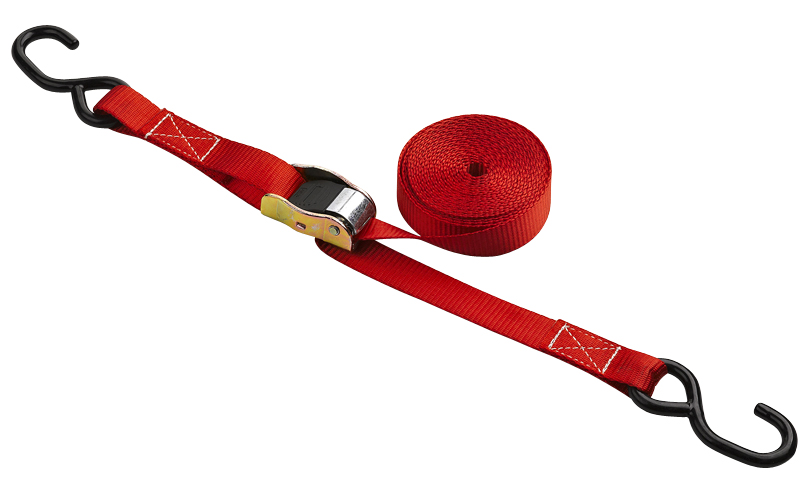
S-hooks are quick to install and rotate freely, helping to minimize strap twisting, though their protruding shape poses a risk of snagging. Flat hooks offer a snug fit and are suitable for narrow anchor points. In contrast, J-hooks are ideal for wrapping around cylindrical objects like pipes or trailer hitch tubes; while snap hooks allow for rapid detachment, they often lack the load-bearing capacity required for transporting heavy machinery.
Priority should be given to products certified under recognized safety standards such as ISO 9001, CE, and GS. The GS mark signifies that a product has passed rigorous third-party testing and complies with German product safety regulations and the European standard EN-12195-2 (regarding load securing devices)—requirements that far exceed the basic self-declaration associated with CE marking. TÜV-audited certification provides further independent verification of a product’s strength and durability.
FAQ
Are flat hooks suitable for all ratchet straps?
No. The hook must match the strap width. A 2-inch flat hook is designed only for 2-inch wide straps. A mismatch in size can result in a loose connection, creating safety risks for the load.
How does a flat hook securely fit into a stake pocket on the trailer side rail?
The flat steel hook body slides snugly into the narrow stake pocket. Once tension is applied, the hook sits flush against the inner wall of the pocket; this friction ensures the hook remains secure during transport.
Do flat hooks require special maintenance?
Simple maintenance is sufficient to keep them in good working order. Users should inspect them for rust, cracks, or deformation before each use. In humid environments, applying a thin layer of lubricant helps prevent corrosion.