Unsafe anchor points for ratchet straps include plastic bumpers, thin sheet‑metal panels, thin wire mesh, steering linkages, brake/hydraulic lines, empty/unreinforced bolt holes, corroded hardware, and unrated rings or custom mounts. Ratchet straps generate tremendous tensile force when tightened. Weak or non‑structural vehicle components will crush, bend, crack or tear under this load. Anchor‑point failure can shift or drop cargo onto roadways, creating property damage, collision risks and serious hazards for other road users. Securing heavy cargo requires connection points built and rated for the intended working load, typically solid structural‑grade steel.
Key Takeaways
‑ Never attach ratchet‑strap hooks to plastic trim, decorative body panels, moving steering/suspension components, or hardware without a verified working‑load rating.
‑ Fasten hooks only to solid, factory‑designated structural steel frame or chassis anchor points.
‑ Complete a full pre‑trip inspection of every anchor location, hook and strap before operating on public roads.
Unsafe Vehicle Points When Using Ratchet Straps
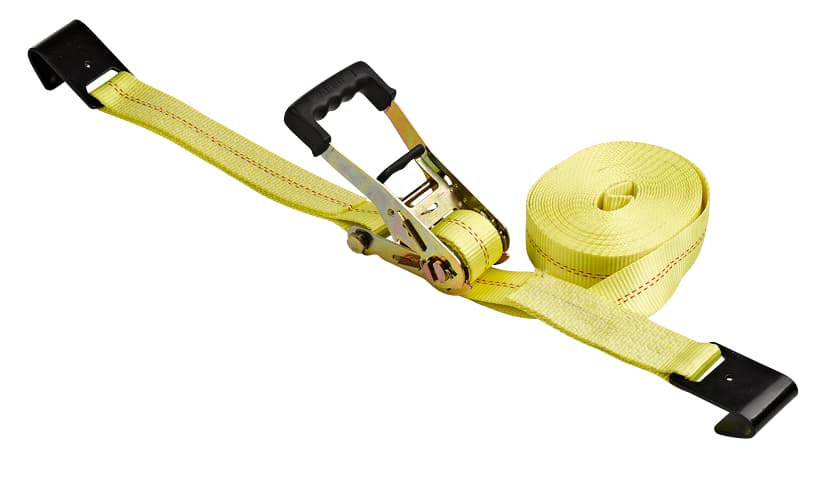
Plastic Trim and Bumper Attachment Risks
Many operators inadvertently damage vehicle body components by hooking ratchet straps to non‑load‑bearing plastic parts. Bumpers, decorative trim and plastic fascia are engineered for impact absorption and appearance, not high tensile pull forces. A tensioned ratchet strap can exert thousands of pounds of pull force. This load will crack, shatter or permanently deform plastic components.
Beyond vehicle damage, plastic mounting points fail dynamically under road conditions: vibration, cornering and bumps can snap plastic fasteners, allowing cargo to shift or come loose. Unsecured loads slide or fall into traffic lanes and create crash hazards. For these reasons, straps should never be secured to flimsy plastic body parts or cosmetic trim.
Thin Sheet‑Metal, Unrated Rails and Non‑Structural Surfaces
Thin‑gauge sheet metal and unsupported truck‑bed panels readily bend, tear or puncture under ratchet‑strap tension. Pulling hard against thin, un‑reinforced aluminum or steel creates permanent deformation and costly repairs. Heavy cargo requires connections to the main vehicle frame rather than surface‑level body panels.
Unrated roof racks, lightweight aftermarket rails and decaying wooden structures also present critical failure risks. Without published Working Load Limit (WLL) values, there is no way to confirm these assemblies can withstand tightening forces plus dynamic loads from braking, cornering and road vibration. Under hard braking, lightweight rails can fracture, releasing cargo directly into traffic. All tie‑down connections should be made to structurally validated chassis or frame anchorages.
Mechanical Hazards: Steering, Suspension and Brake Components
Steering Arms, Suspension Parts and Brake Lines
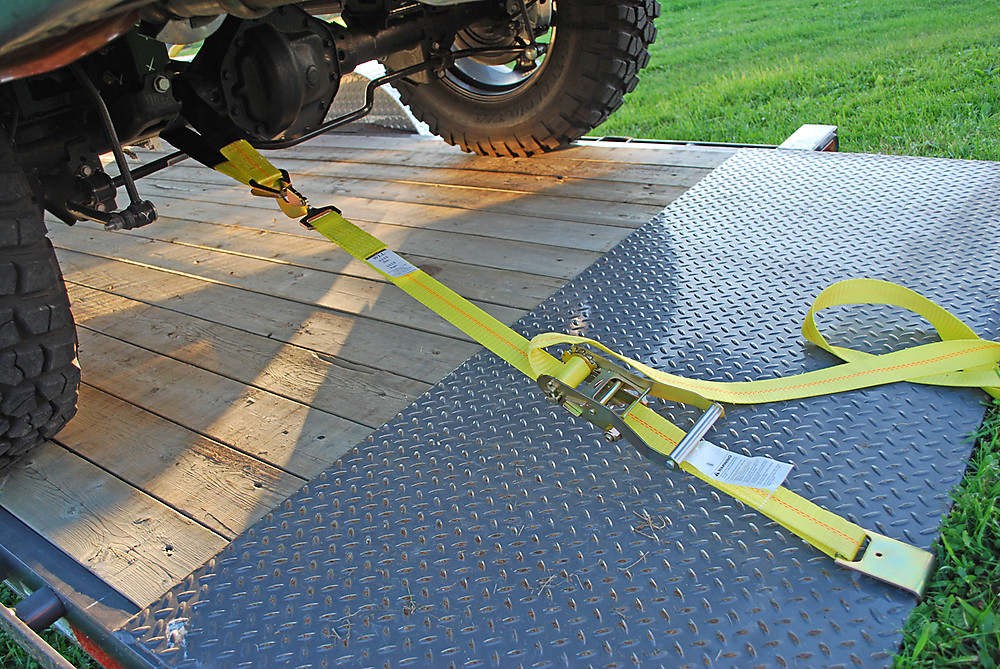
Attaching tie‑down straps to moving steering or suspension components introduces severe mechanical failure risks. When a ratchet strap is anchored to steering linkage, sustained tension can bend steering arms, alter wheel alignment and accelerate tire wear.
Road‑induced bounce continuously changes strap tension during transport. Repeated pulling and compression can crush or abrade hydraulic brake lines. Damaged brake lines cause fluid loss and partial or total loss of braking capability. Securing cargo to live suspension and steering assemblies risks sudden loss of vehicle control and must be avoided entirely.
Thin Wire Grates and Empty Screw / Bolt Holes
Thin wire‑mesh trailer floors and side‑wall grates are not designed for high‑load tie‑downs. Normal ratchet tension can tear wire mesh, allowing cargo to shift during stops or turns. Empty screw holes and unreinforced bolt holes lack the material thickness and backing structure to resist strap pull‑out. Sharp hole edges can also abrade and cut strap webbing. Weak side‑wall supports may bend outward under load, dumping cargo onto travelled roadways. Any anchor hole must be reinforced and have a documented working‑load rating before use.
Additional Common Ratchet‑Strap Mistakes
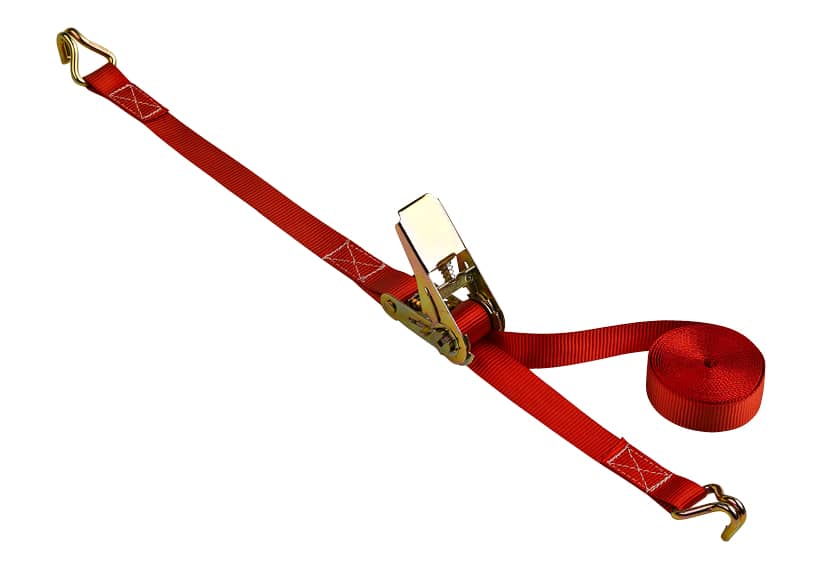
Severe Corrosion and Unrated Mounting Rings
Heavily rusted anchor points lose structural integrity. Surface rust may hide internal cracks in steel loops and mounting points. Even hardware that appears intact can fracture under dynamic load.
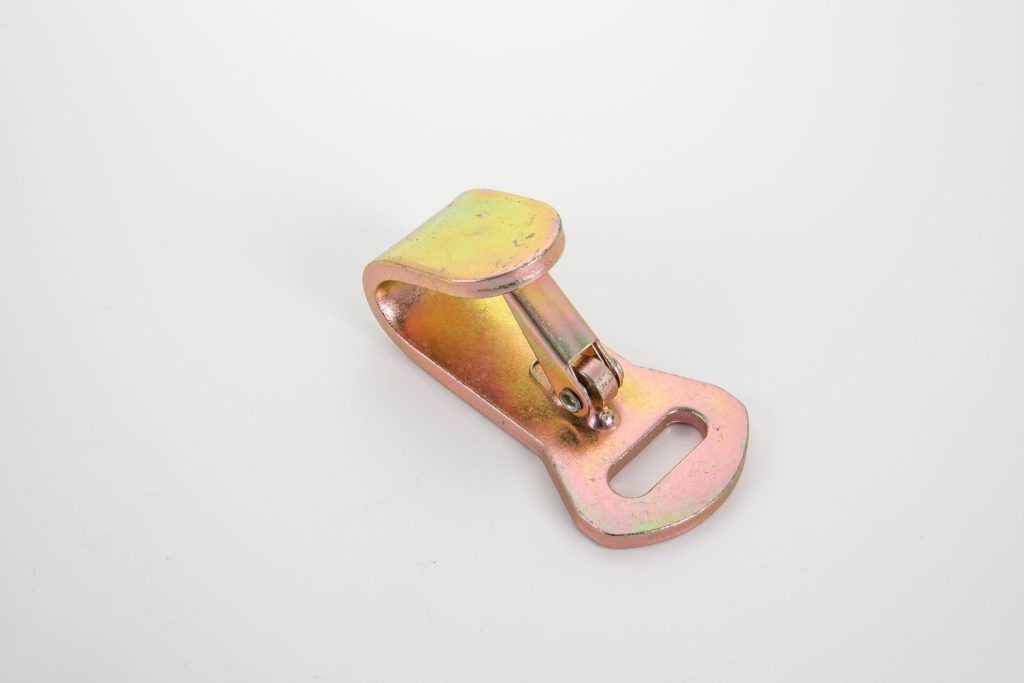
Custom‑fabricated mounting rings without load ratings create hidden failure modes. S‑hooks on unrated rings can slip or pull apart under tension. The anchor‑point Working Load Limit must meet or exceed the tie‑down system’s rated capacity. Mismatched ratings — for example a high‑capacity strap attached to a low‑strength anchor — produce a critical failure point, regardless of strap quality. Always use hardware whose WLL is clearly marked and verified.
Sharp Edges and Over‑Tightening
Sharp metal corners on cargo, pallets or trailer framing can slice woven strap webbing during highway transit. Edge protectors (corner guards, sleeve pads) should be fitted wherever straps pass over sharp edges to prevent webbing cuts and abrasion damage.
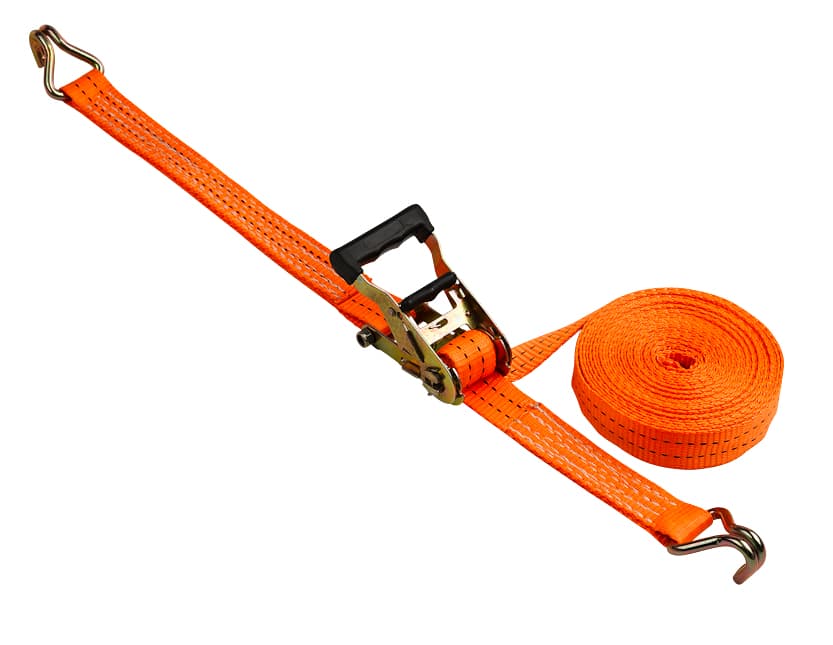
Over‑tightening is another frequent error. Excessive force can deform ratchet‑mechanism components, jam gears, bend hooks and distort anchor points. Proper use requires firm, controlled tension rather than maximum possible leverage. Pre‑trip visual checks should confirm webbing is not frayed, hardware is not bent, and anchors show no signs of yielding.
Best‑practice summary: Attach every ratchet strap to rated, structural‑steel frame anchor points. Avoid body sheet metal, plastic trim, moving steering‑suspension parts, brake lines, corroded fittings and un‑rated hardware. Inspect all anchors, hooks and webbing before travel to prevent cargo shift, component damage and roadway safety incidents.
FAQ
How can operators identify a safe anchor point on a vehicle?
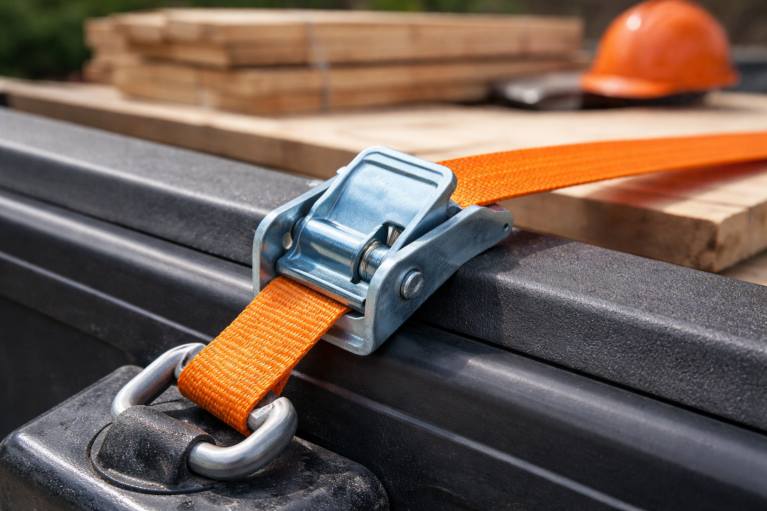
A: Prioritize thick structural steel frame/chassis locations or factory‑fitted D‑rings with clearly marked Working Load Limit ratings. Cosmetic body panels, thin sheet metal and unmarked custom fittings should not be used as tie‑down points. When manufacturer documentation is available, follow the vehicle OEM’s list of approved tie‑down locations.
Why should drivers avoid hooking ratchet straps to steering linkages?
A: Vehicle bounce constantly varies strap tension in transit. Pull forces can bend steering components, disrupt wheel alignment, destroy tires and potentially lead to loss‑of‑control crashes. These are moving safety‑critical parts and are never intended for cargo‑tie‑down loads.
What should haulers do if an anchor point lacks a Working Load Limit?
A: Do not use that location for securing cargo. Select only OEM‑approved or third‑party‑tested anchor hardware with published WLL values. Install rated aftermarket anchor fittings where factory points are insufficient, rather than improvising with un‑rated mounting positions.