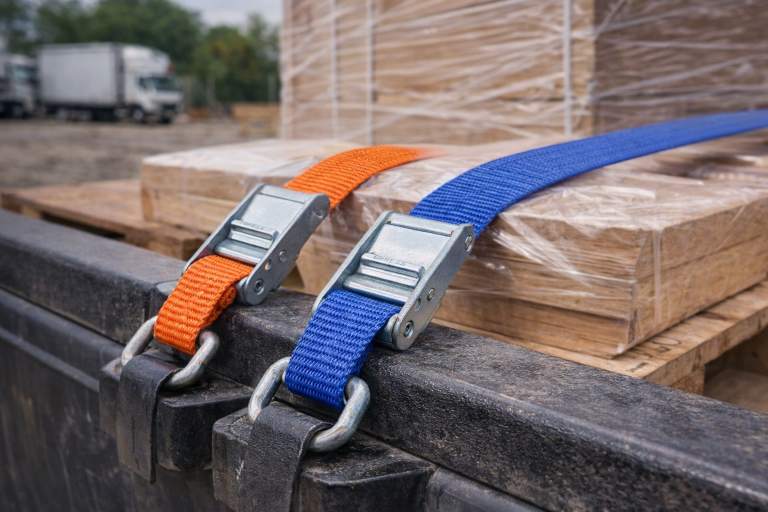
Cam buckle tie downs suit lighter cargo and delicate items, for two reasons. A cam buckle strap grips the webbing the moment the cam closes, so securement takes seconds and no tools are needed. The hand operated design also gives the user direct control over tension, so fragile goods rarely get overtightened.Cam buckle straps also work well for loads that need gentle tension, which is why many drivers keep a set in the cab for daily jobs.
BAOYING’s cam buckle straps take this further, with cam buckle and ratchet straps, hook fittings, and over center buckles rated from 500 to 10,000 lbs working load limit and finished with zinc anti corrosion coating.This guide covers where cam buckle tie downs suit light cargo, and where a ratchet strap is the better fit.
Key Takeaways
- Cam buckle tie downs work well for light and delicate items such as kayaks and furniture.
- The hand-operated design tightens fast and stops damage from overtightening.
- Always check the working load limit and look over the straps before each use.
- Use cam straps for light loads and ratchet straps for heavy freight.
- Using them the right way and storing them well makes cam straps last longer and keeps cargo safe.
What Is a Cam Buckle Strap?
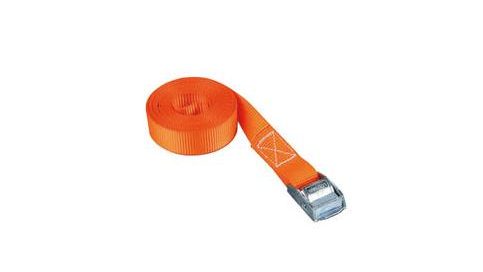
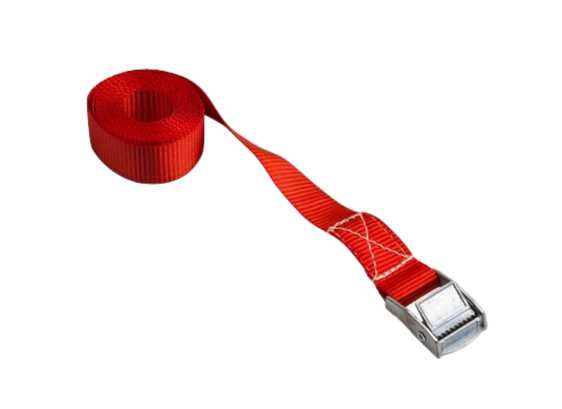
A cam buckle strap is a tie-down strap with a spring-loaded metal buckle that grips the strap material by friction. The user pulls the free end by hand, and the buckle holds the tension. A small lever or thumb press releases the grip.
Parts of a Cam Buckle Tie Down
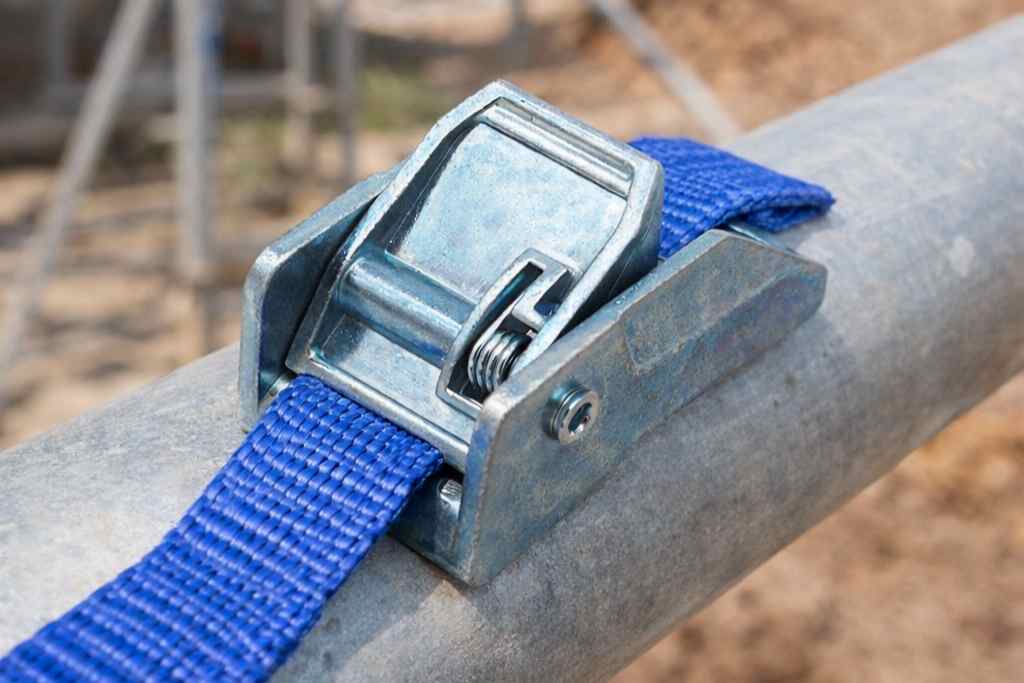
Every cam buckle strap has three main parts. The first is the strap itself, called webbing. Most cam buckle straps use polyester webbing, a woven fabric that resists stretching, moisture, and sunlight. The second part is the cam buckle hardware, a metal frame with a spring-loaded toothed bar. The third part is the end fitting, usually a hook or a loop that attaches to an anchor point.
Each strap also carries a working load limit. This number states the maximum load the manufacturer rates the strap to hold in normal service. Users should read this figure before choosing a strap for any job. A cam straps overview from a reputable supplier will list this rating for every model.
How the Cam Buckle Works
The cam buckle holds the load through simple friction. The spring pushes the toothed bar against the frame. Pulling the webbing through the cam buckle forces the bar tighter against the fabric, so the strap locks in place. Pushing the lever or thumb press lifts the bar and frees the strap.
Some cam buckles accept the strap from the back side of the frame. This design adds security because the load pulls the webbing deeper into the grip. These models take slightly more effort to thread, so users should practice before a first job.
Cam straps suit many light securement tasks. A cam strap works well for a kayak on a roof rack, a cooler in a truck bed, or a bag on a motorcycle. These tie down straps also help a wholesale buyer stock a simple, low-cost option for retail shelves. A manufacturer can supply cam buckle straps in many lengths and colors for custom orders. These tie-down straps remain a practical, easy-to-learn choice for light cargo.
Cam Straps vs. Ratchet Straps
Strength, Control, and Cost
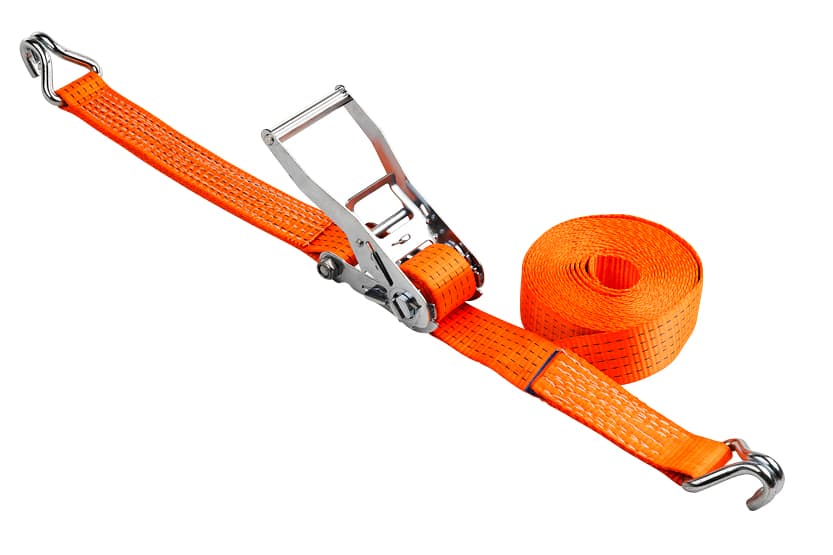
The cam straps vs. ratchet straps comparison really comes down to two things. It depends on how much locking force each design gives and how much control the user keeps. A cam buckle strap weighs less, costs less, and tightens in seconds. A ratchet strap wins on raw holding power for heavy freight. Cold hands favor the cam strap, because a simple pull sets tension without repeated lever strokes.
| Feature | Cam Buckle Straps | Ratchet Straps |
|---|---|---|
| Tightening action | One hand pull | Repeated lever strokes |
| Locking force | Moderate, hand-generated | High, mechanically multiplied |
| Weight and cost | Lighter, lower cost | Heavier, higher cost |
| Risk to fragile cargo | Low, rarely overtightens | Higher, easy to over-crank |
A cam buckle rarely overtightens cargo. That trait protects fragile items such as kayaks, furniture, and electronics. The force they can apply stays limited to what a hand can pull. Heavy-duty cam buckle straps have been reported to fail around 1,200 lbs without shock load at the cam-strap interface. Users should therefore match the strap rating to the load. They should never treat a cam buckle as a substitute for a ratchet strap on heavy freight.
Best Uses for Each Type
Each design has a clear home in cargo securement. Cam buckle straps fit kayaks, RVs, roof rack mounts, motorcycles, and light cargo. A cam strap shines on a boat trailer or a utility trailer hauling gear under a few hundred pounds. The gentle grip suits a roof rack carrying a paddleboard, and the quick release helps at a launch ramp. Wholesale buyers and OEM clients often stock cam buckle straps as an everyday, low-cost option for retail shelves.
Ratchet straps fit flatbeds, heavy machinery, and industrial loads. A factory shipping equipment or a supplier moving steel coils relies on the mechanical advantage of a ratchet buckle. The ratchet design holds constant tension over long distances and resists vibration on rough roads.
Neither option is better in every case. A cam buckle serves light, delicate, frequent jobs. A ratchet strap serves heavy, static, high-value freight. A manufacturer that offers both lets a customer pick the right tool for each task. Proper securement starts with an honest look at the weight and fragility of the cargo, then a strap that matches it. One anchor point and a correctly rated strap complete the job. A tie-down that fits the work beats a stronger strap used on the wrong load.
How to Use Cam Buckle Straps
A cam buckle strap rewards good technique. The steps below cover tightening, releasing, and adjusting. Each step takes only a moment. The hand-operated design enables fast tightening without damaging fragile goods. A user pulls with the strength of one hand, so a kayak, a piece of furniture, or a box of electronics never feels crushing force. These how to tighten a cam buckle strap instructions apply to most standard models.
Tightening Step by Step
- Thread the webbing through the cam buckle hardware from the correct side. Follow the arrow or the molded guide on the frame.
- Pull the free end through until the strap sits snug against the cargo.
- Hook or loop the end fitting to a solid anchor point on the vehicle or trailer.
- Grip the free end with one hand and pull steadily. The cam buckles grip the webbing as tension rises.
- Push down on the lever with the thumb to seat the cam fully.
- Test the tension with a firm hand push on the cargo. Retighten if the load shifts.
A user should check tie-down pressure by hand, not by eye. The strap should feel firm with no slack. Slight give is normal and protects fragile items. Over-pulling adds no benefit with this design. A quick second pull after the first few miles of driving catches any settling. This habit keeps securement reliable on long trips.
Releasing and Adjusting
- Support the cargo with one hand before loosening anything.
- Press the lever or thumb press to lift the cam bar off the webbing.
- Pull the webbing back through the buckle to slacken the strap.
- Unhook the end fitting from the anchor point.
- Re-thread and re-tension for a new load.
These how to release a cam buckle strap instructions work the same way on every standard model. A user should never pry the cam with a tool. The spring and bar need only a light thumb press to operate the cam buckle. Releasing slowly prevents a sudden drop of the load.
Adjustment takes seconds with practice. A driver can shorten or lengthen the strap without removing it from the anchor. This speed makes cam straps a favorite for repeated stops, such as a delivery route or a boat launch. Wholesale buyers value this simplicity because end users learn the system fast. A manufacturer that supplies clear instructions with each strap builds trust with every shipment. Proper technique protects both the cargo and the tie down straps themselves.
Choosing and Caring for Cam Straps
Picking the Right Length and Load Rating
Strap length should match the span between the cargo and the anchor point, with a little extra for the tail. A strap that barely reaches leaves no room to pull. An oversized strap leaves a long loose end that flaps in the wind. Users should measure the route first, then add a short working margin.
The working load limit matters just as much. This figure must exceed the weight of the cargo, and a safety margin on top is wise. A manufacturer prints the rating on a label or tag. Buyers should never guess. BAOYING cam buckle straps offer a lightweight, hand-operated option for kayaks, RVs, roof racks, and light cargo. Wholesale buyers can order custom lengths and widths for retail programs.
Storage and Inspection Tips
Proper storage extends the life of any tie-down. Users should coil each strap loosely, secure the coil, and store it dry. Direct sunlight breaks down synthetic fibers over time, so a closed bin or a shaded shelf works best. A clean, dry coil also prevents mildew and keeps the cam buckle hardware free of grit.
Inspection before each use catches small problems early. A user should look for cuts, fraying, and thinning spots along the full length. Rust on the metal parts signals moisture exposure. A worn cam surface may slip under tension. Any strap with damage to the webbing or a weak cam buckle should leave service at once. These checks take under a minute and protect both cargo and driver. A supplier that ships clear care guidance helps every customer get full value from each strap.
Tying Down Cargo with Cam Buckle Straps
Single Anchor Point Method
One anchor point setup suits short runs and compact loads. The user hooks one end of the strap to a single secure anchor point on the vehicle, passes the webbing over or around the cargo, and returns the hook to the same anchor point. The cam buckle sits near that anchor point, where the hand can reach it. Pulling the free end draws the load down against the deck or rail.
This layout works well for boat tie downs on a small trailer and for automotive tie downs inside a trunk. A motorcycle strap can loop over the seat and return to one anchor point on the frame. The load must sit centered over that anchor point, or it will shift sideways. A user should press the cargo with one hand after tightening. Any rocking motion means the load needs a second anchor point.
Two Anchor Point Methods
Two anchor point setups spread the holding force and stop rotation. In the straight-across method, the user runs the strap from one anchor point on the left rail to a matching anchor point on the right rail, with the cargo beneath the webbing. This pattern fits truck straps across a flatbed and cam buckle straps over a roof rack carrying a kayak. The load stays flat and cannot pivot.
The diagonal method crosses the strap from a front-left anchor point to a rear-right anchor point, then repeats on the opposite side. Two crossed cam straps form an X over the cargo. This arrangement suits a roof rack holding a wide board and a motorcycle strap run from the handlebars to a rear anchor point. Each cam buckle should sit close to its anchor point for easy reach. A supplier or manufacturer can advise on strap counts for custom fleet orders. Good cargo securement starts with planning the route before the first pull. Tying down items this way takes little time and gives dependable securement on every trip.
Cam buckle tie downs remain a solid choice for lighter loads and delicate cargo. The cam buckle tightens in seconds, and the hand-operated pull rarely crushes fragile goods. Few tie down straps offer this mix of speed and control.
Readers should match each strap to the load, inspect the webbing and hardware before every trip, and follow the proper tightening and release steps. These habits protect both cargo and cam straps. A quick check of the anchor point takes little time.
Buyers should pick the tie-down that fits the job. Ratchet straps suit heavier demands, while cam buckle straps serve light, frequent securement. The right tie-down straps make every haul safer.
FAQ
What loads suit cam buckle straps best?
Cam buckle straps handle light and fragile cargo well. Kayaks, roof rack gear, furniture, and motorcycle bags fit this category. A user should check the working load limit on the tag first. Heavy freight needs a ratchet strap instead.
Do cam straps damage fragile cargo?
Rarely. The hand-operated pull limits force to what one hand can apply. A cam strap tightens gently and holds firm. Users should press the cargo after tightening. Slight give is normal and protects delicate items.
Will a cam buckle hold in rain or vibration?
Yes, with care. Polyester webbing resists moisture, and the cam buckle grips by friction. A user should recheck tension after the first few miles. Wet webbing can slip slightly, so a second pull helps.
How long do tie down straps last?
Lifespan depends on use and storage. A user should inspect tie-down straps before every trip for cuts, fraying, rust, or cam wear. Any damaged strap should leave service at once. Dry, shaded storage extends life.
How does a buyer choose between strap types?
The job decides. A supplier or manufacturer can match strap ratings to the cargo. Light, frequent securement favors a cam buckle. Heavy machinery favors a ratchet design. Honest load assessment comes first.