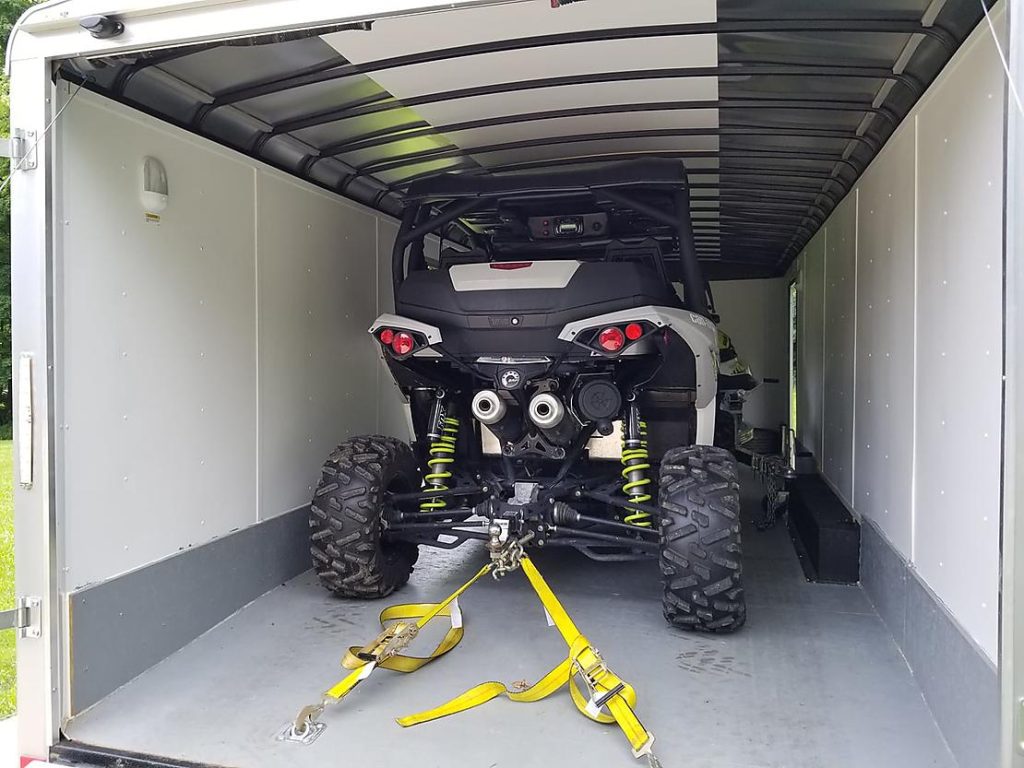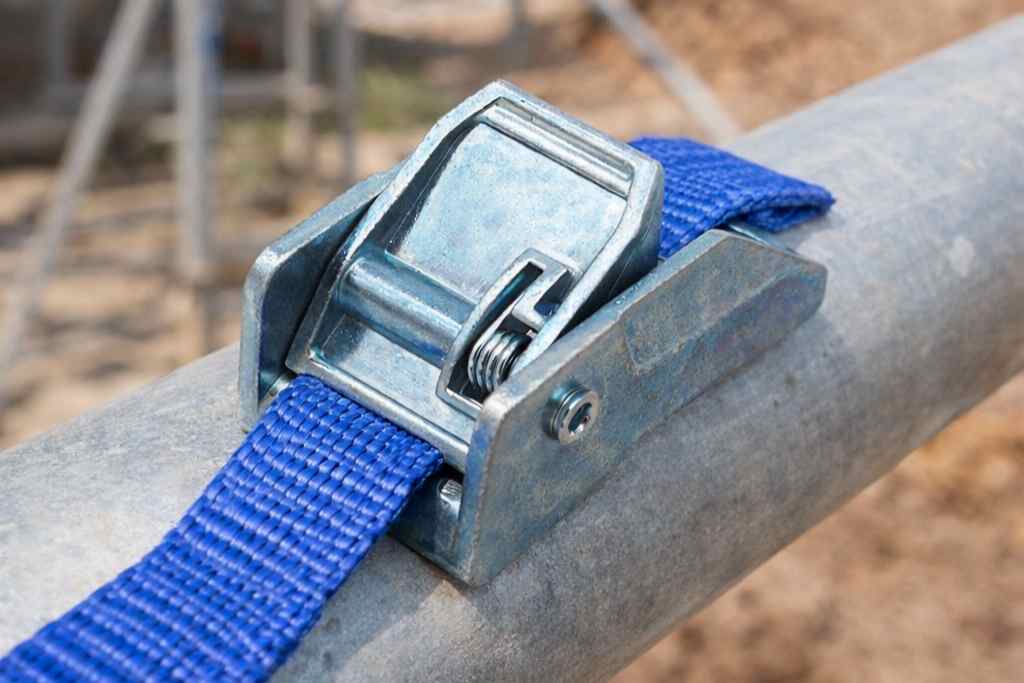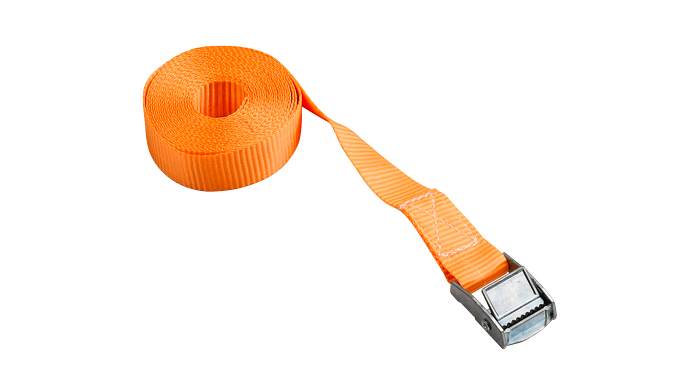
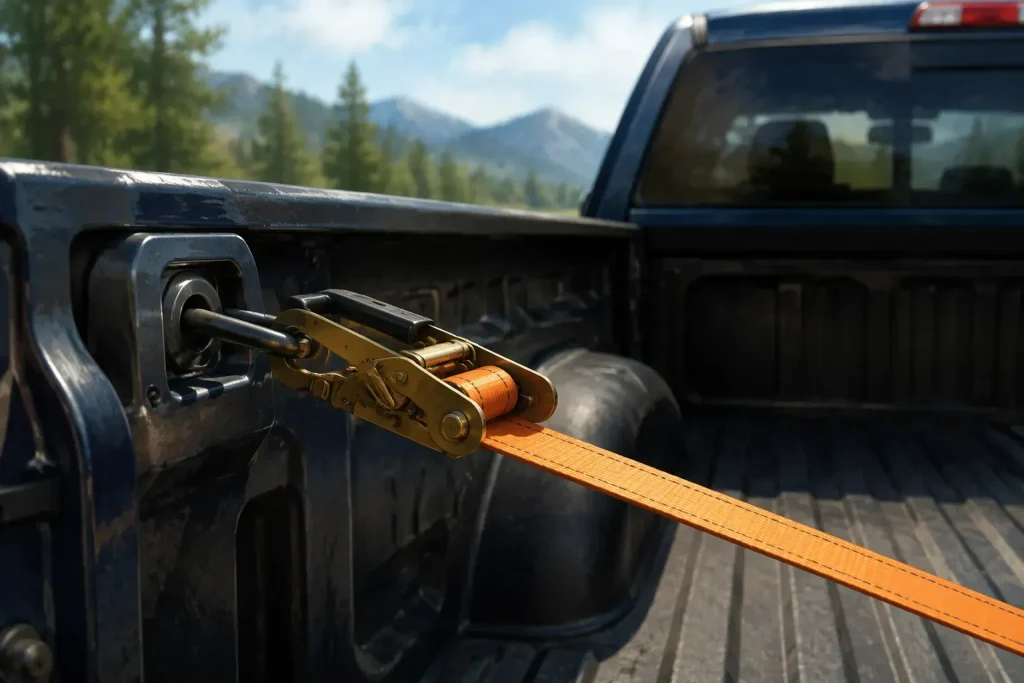
A truck bed offers four main attachment points: factory tie-downs, bed rails, stake pockets, and aftermarket anchors. The best choice depends on the load type and the specific truck model, since a weak or wrong anchor can let cargo shift, bend sheet metal, or scratch paint.Ratchet straps outperform bungee cords, rope, and twine for truck bed tie-downs, because they hold constant tension and keep the load in place on rough roads, while bungee cords stretch, rope loosens, and twine snaps under strain.
nbby1’s tie down straps take this further, with ratchet and cam buckle straps, hook fittings, and over center buckles rated from 500 to 10,000 lbs working load limit and finished with zinc anti corrosion coating.This guide walks through anchor selection and strap choice, so every truck bed load stays secure on the road.
Key Takeaways
- Choose the right anchor for your load: factory tie-downs for light items, bed rails for tall loads, and stake pockets for long items.
- Inspect anchors and straps before every trip to catch damage early and prevent accidents.
- Use at least four anchor points to spread the load and keep cargo from shifting.
- Point hook openings down so straps stay seated even on bumpy roads.
- Match the strap’s working load limit to the cargo weight for safe hauling.
Factory Tie-Downs
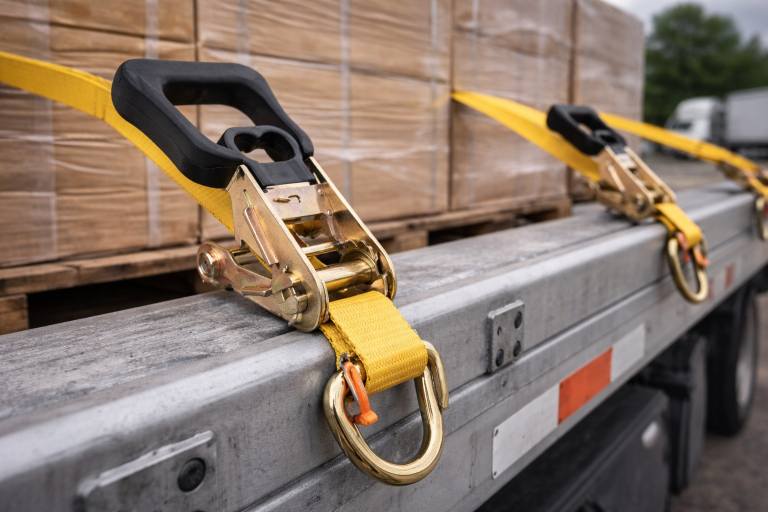
Locating Factory Tie-Downs
Most truck makers build tie-down points into the bed at the factory. These points usually sit in the four corners of the bed floor, along the inner side walls, and sometimes on the lower lip of the bed rails. A typical pickup carries four to six of them, though the count varies by model and trim level. Look for small metal loops, D-shaped rings, or recessed hooks welded or bolted to the steel. Many trucks stamp a small icon or label near each point. The owner’s manual lists the exact locations and the load rating for each one.
A quick walk around the bed with a flashlight reveals every anchor. Check the corners first, then run a hand along each side wall. Some points hide under plastic bed liners, so a liner may need a small cutout to expose them. Clean any dirt or rust from the loop before attaching a strap. A dirty anchor wears webbing faster.
Best Loads and Precautions
Factory tie-downs suit light and medium loads. Furniture, appliances, boxed goods, lawn equipment, and small motorcycles all work well here. These anchors also handle the lightest jobs, such as a cooler or a stack of lumber. Heavier cargo needs more anchor points or a stronger setup.
The factory rating sets the limit. Most manufacturers publish a working load for each point, and that number is often lower than drivers expect. Exceeding it can tear the loop from the sheet metal. Pull straps at a shallow angle toward the load, not straight up. A steep pull concentrates force on one spot and bends the bed wall. Route webbing away from sharp edges, and use a protective sleeve where a strap crosses metal.
Inspect each loop for cracks, loose bolts, or rust before every trip. Replace damaged hardware rather than trusting it with a load. Pair these anchors with quality ratchet straps for steady tension on long drives. BAOYING, a tie down strap manufacturer, builds heavy-duty straps with working load limits from 500 to 10,000 lbs. These straps match factory tie-downs well and keep cargo secure on rough roads. Wholesale buyers and trailer brands can order them in bulk with custom lengths and hardware.
Bed Rails and Tracks
Attaching to Bed Rails
Bed rails form the top edge of the truck bed side walls. Many pickups include factory rails with built-in slots or loops. Others carry smooth rails with no anchor points at all. Drivers with smooth rails can add clamp-on rail anchors. These bolt or clamp onto the rail lip without drilling.
Hook the strap end to the rail anchor, then route the webbing over the load. Keep the hook opening facing down so the strap cannot slip off during a bump. Pull the webbing straight across the bed, not at a sharp diagonal. A diagonal pull twists the rail and puts uneven stress on the clamp. Tighten the ratchet until the webbing feels firm, then test the load with a firm push. A strap that moves under hand pressure needs more tension.
Bed rails handle tall, light loads well. Ladders, lumber, pipe, and kayaks all tie down neatly at rail height. The high anchor point keeps straps clear of the cargo and reduces rubbing. Rail anchors carry less weight than floor-mounted hardware, so they suit loads that fill the bed without pressing hard on the floor. Place a soft cloth or webbing sleeve between the strap and the painted rail. This simple step prevents scratches and scuffs. Check the rail for bending after each trip. A rail that flexes under load needs a lower anchor point instead.
Using Utility Tracks
Utility tracks, also called airline tracks or L-track, run along the bed floor or side walls. These aluminum rails hold sliding rings at any point along their length. The sliding design lets a driver position each anchor directly beside the cargo. That flexibility improves strap angles and spreads force across the track.
Slide each ring to the chosen spot, then lock it in place. Attach the strap hook to the ring and tighten as usual. Keep the hook seated fully inside the ring. A half-seated hook can pop free when the load shifts. Clean the track channel before each use. Dirt and gravel block the rings and stop them from locking.
Tracks suit heavy, bulky items. ATVs, motorcycles, generators, and stacked pallets all secure well on a track system. Spread the anchors wide apart to control side-to-side motion. Avoid overtightening, which can crush soft cargo or bow the track. Inspect the mounting bolts now and then. Loose bolts let the track pull free under load.
BAOYING supplies ratchet straps for rail and track setups and offers ODM/OEM customization. Wholesale buyers can specify webbing color, logo printing, hardware shape, length, and width. This flexibility helps distributors and trailer brands match straps to each truck model.
Stake Pockets
Attaching to Stake Pockets
Stake pockets are the rectangular openings spaced along the top of a truck bed’s side walls. They exist so drivers can drop in removable stakes for holding tall cargo. Each pocket also works as a strong anchor for a strap hook. The pocket sits lower than the bed rail, so a hook seats deep inside the opening and pulls against solid steel.
To attach, drop the hook into the pocket with the opening facing down. Route the strap over the load and tighten it with the ratchet. Keep the hook centered in the pocket so it cannot catch on the edge. A hook that rests on the rim can bend the thin metal lip. Stake pockets suit loads that sit above the bed walls, such as lumber, pipe, or a tall appliance. They also work well when the factory tie-downs sit too low for a clean strap angle.
Best Loads for Stake Pockets
Stake pockets handle long, rigid items with ease. Boards, metal tubing, ladders, and fence posts all tie down securely at this height. The high anchor point keeps the strap away from the cargo’s sharp corners. Drivers should still protect the webbing where it crosses a rough edge. A sleeve or a folded cloth prevents fraying.
One practical habit sets careful drivers apart. Place the ratchet on the passenger side of the vehicle. If the load shifts on the road, the driver can step to the curb side and adjust the tension away from traffic. This small choice keeps hands and body clear of passing cars. Check each pocket for cracks or rust before use. A pocket that shows damage needs repair before it carries any load. Pair these anchors with quality ratchet straps for steady tension on every trip.
Choosing Ratchet Straps for Your Load
Adding D-Rings and Anchors
Strap selection starts before the ratchet ever clicks. The working load limit of the strap must exceed the weight of the cargo, and the anchor must carry its share of that force. A strap rated too low will stretch or fail under a heavy load. Check the label on the webbing for the working load limit, then compare it with the cargo weight. Divide the total weight by the number of anchor points to find the load on each one.
Aftermarket anchors expand the options on any bed. Bolt-on D-rings mount to the floor or side walls and add a strong steel loop where the factory left none. Tie-down anchors clamp to the bed rail without drilling. Choose hardware rated for the load, and mount it to solid steel, not thin sheet metal. Use backing plates or large washers behind floor bolts to spread the force. Tighten every bolt fully, then tug each anchor hard before trusting it with cargo.
Choosing Aftermarket Solutions
A full strap system covers more than the ratchet itself. BAOYING, a tie down strap manufacturer, supplies ratchet straps, cam buckle straps, and over center buckle straps, plus tie down hardware such as ratchet buckles, cam buckles, over center buckles, and hooks. The webbing uses high-tenacity polyester, and the metal parts carry zinc plating for corrosion resistance. Working load limits run from 500 to 10,000 lbs. The factory holds ISO 9001, CE, and GS certifications, and ships from a site 18 kilometers from Ningbo Beilun Port. Wholesale buyers, trailer brands, and hardware distributors can request custom webbing color, logo printing, hardware shape, length, and width.
Follow a few simple rules on every trip:
- Do match the strap rating to the load and inspect webbing for cuts before use.
- Do keep hooks seated with the opening facing down.
- Don’t overtighten soft cargo or route webbing over sharp edges.
- Don’t trust a frayed strap or a cracked anchor.
The right anchor makes a strap work well. Factory tie-downs handle light loads, bed rails and tracks carry tall or bulky cargo, and stake pockets hold long, rigid items. Drivers should match each point to the load and spread the force across several anchors. A quick inspection before every trip catches frayed webbing, cracked loops, and loose bolts early. Safety deserves this small effort. Proper tie-downs protect the truck’s paint and sheet metal, and they keep cargo off the road. Wholesale buyers and fleet managers can apply the same habits across every vehicle. With the right anchor and a firm pull on the ratchet, any driver can haul with confidence.
FAQ
How many anchor points should a driver use?
Use at least four points for a typical load, one near each corner. Heavy or tall cargo needs more. Spreading force across several anchors lowers the strain on each one and limits side-to-side movement. Two straps crossed over a single load rarely hold it as well as four separate pulls.
Can stake pockets hold heavy cargo?
Stake pockets carry long, rigid items well, such as lumber, pipe, and ladders. They sit lower than the bed rail, so a hook seats deep against solid steel. Drivers should still check each pocket for cracks or rust. A damaged pocket needs repair before it carries any load.
Which way should the hook face?
Point the hook opening down. Gravity then keeps the strap seated inside the anchor, even when the load bounces. A hook that faces up can lift off during a bump. Seat the hook fully in the anchor and tug it once before tightening the ratchet.
How often should straps and anchors be inspected?
Check both before every trip. Look for cuts, fraying, or stiffness in the webbing, and cracks, rust, or loose bolts at each anchor. Replace damaged parts rather than trusting them with cargo. A strap that fails at speed puts other drivers at risk.
Can a truck without bed rails add anchor points?
Yes. Clamp-on rail anchors and bolt-on D-rings add strong loops without major work. Mount them to solid steel, use backing plates behind floor bolts, and tighten every bolt fully. Tug each new anchor hard before trusting it with a load.