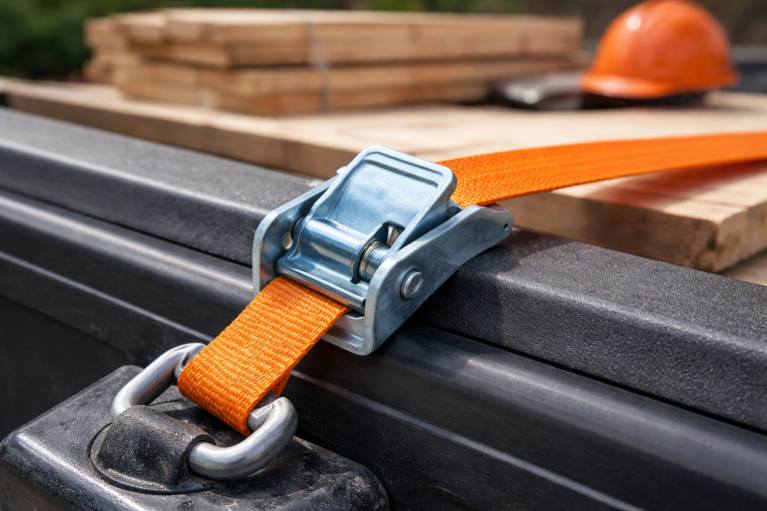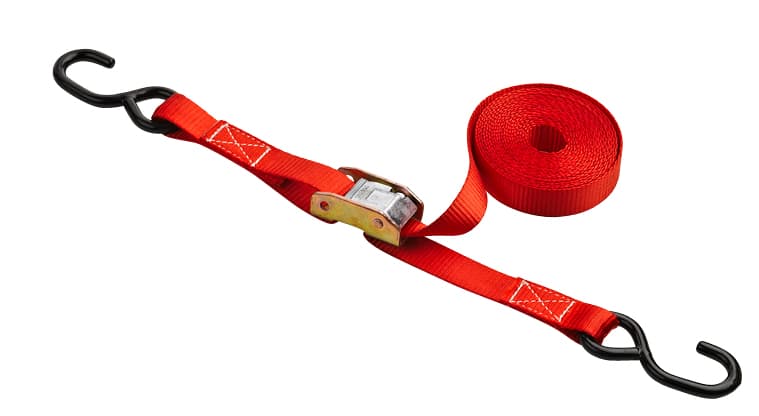
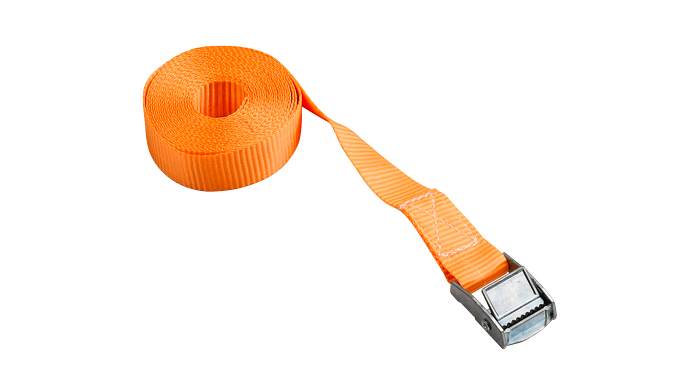
A cam buckle tie down strap grips webbing with a spring-loaded cam, so a hand pull tightens the load and a thumb lift releases it in seconds. That simple action suits lighter to medium loads, such as gear, boats, or cargo on a trailer, and boxes held in a pickup bed.The cam holds with gentler tension than a ratchet strap, which keeps fragile items protected. One warning applies: do not over-pull, because excess force can crush soft loads.
nbby1’s cam buckle straps take this further, pairing spring-loaded cam buckles with high-tenacity polyester webbing and zinc anti-corrosion coating, across working load limits from 500 to 10000 lbs.
Key Takeaways
- Cam buckle straps secure light to medium loads with a hand pull.
- A spring-loaded cam grips the webbing and locks tension without tools.
- Most cam straps hold 550 to 1,100 pounds, so check the label for your load.
- Use cam straps for gear, boats, ATVs, and roof rack cargo.
- Avoid over-tightening to protect fragile items and prevent damage.
Cam Straps Overview: What Is a Cam Buckle?
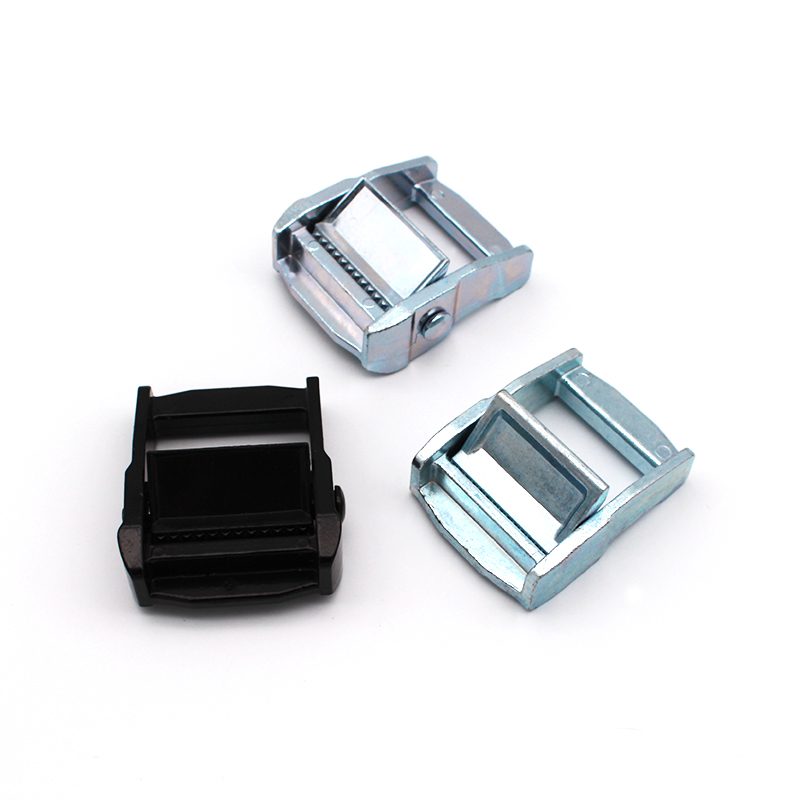
BAOYING is a professional tie down strap manufacturer, and cam buckle straps are one product in its broader cargo control line. That line also includes ratchet straps and over center buckle straps. This cam straps overview covers how the hardware works and where it fits.
How the Cam Buckle Mechanism Works
A cam buckle holds webbing with a spring-loaded toothed cam. Grandlifting explains the locking principle: the user threads the webbing through the buckle, and the cam teeth grip the webbing to prevent slippage. Tension stays locked without knots or tools.
Tightening takes four quick steps:
- Turn the cam buckle so the bottom slot faces up, then press the thumb release to open the slot.
- Feed the loose end of the strap up through the bottom slot and pull through about 6 inches of slack.
- Keep pressing the release and pull the strap to the desired tension; the cam teeth grip as you pull.
- Let go of the thumb button to lock the strap at that tension.
Release works the same way in reverse. Press the thumb lever, pull the webbing back through the slot, and the cam buckles let go. These cam straps rely on hand force alone, so the tension stays moderate.
Load Range and Best-Fit Applications
Construction matters as much as the mechanism. BAOYING builds its straps from high-tenacity polyester webbing and zinc anti-corrosion coated metal hardware. The materials hold a stable tension lock and resist wear, salt spray, and vibration.
Ratings vary widely. Vulcan Brands reports that most cam buckle straps are rated between 333 lbs and 833 lbs, depending on webbing width and construction. Hangcheng Parts puts typical working load limits at 250–500 kg, or roughly 550–1,100 lbs. Users should always read the label on the specific strap.
The table below, from Hangcheng Parts, shows how cam straps vs. ratchet straps differ in strength:
| Strap Type | Typical Working Load Limit (WLL) | Breaking Strength |
|---|---|---|
| Cam Buckle Strap | 250–500 kg (approx. 550–1,100 lbs) | ~1,000–1,200 lbs |
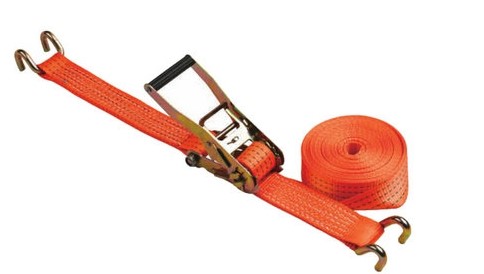
| Ratchet Strap (1-inch) | 500 lbs | 1,500 lbs |
| Ratchet Strap (2-inch) | 3,333 lbs | 10,000 lbs |
This load range suits light-to-medium duty. Hangcheng Parts lists roof rack gear, luggage, camping equipment, and kayaks among the best uses. BAOYING also offers ODM/OEM customization, covering webbing color, logo printing, hardware shape, length, and width. The company holds ISO 9001, CE, and GS certifications.
Choosing Length and Operating Cam Buckle Straps
Picking the Right Strap Length
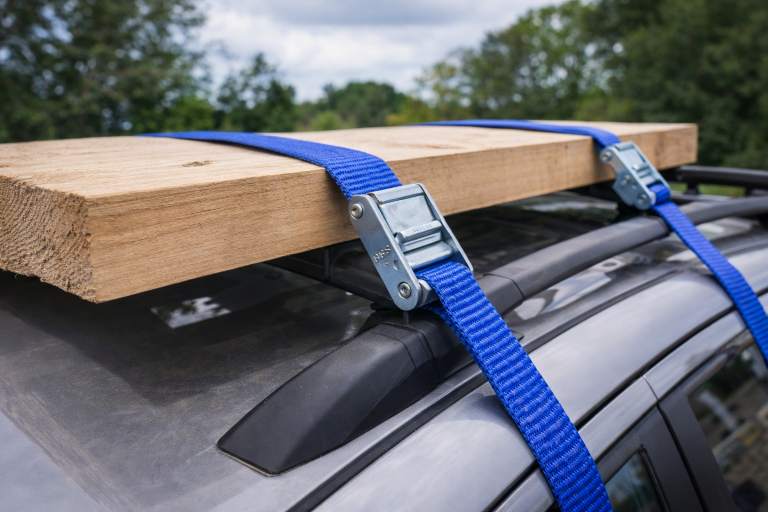
Length selection starts with measurement. Vulcan Brands advises users to measure the distance around the load plus the distance to each anchor point, then add roughly 2-3 feet of extra length for threading and a working tail. Mac’s Custom Tie-Downs offers a simpler rule: choose straps at least 1.5 times the length of the cargo. A long bed trailer with far-spaced attachment points needs more webbing than a compact roof rack.
Width and working load limit matter as much as length. A narrow strap suits a cooler or a bundle of lumber, while a wider cam buckle strap carries heavier gear with less stretch. Users should confirm the rated limit exceeds the weight of the item being secured. A strap that is too short will not reach the far anchor point, and one that is too long leaves excess webbing to manage.
Threading, Tightening, and Storing
The steps to operate the cam buckle are quick to learn:
- Press the thumb release to open the slot, then feed the webbing up through the bottom slot.
- Pull the tail through until the cam straps sit snug against the cargo.
- Release the thumb lever so the cam teeth grip the webbing and lock tension.
- To loosen, press the lever again and pull the webbing back out.
Proper storage extends service life. Vulcan Brands recommends coiling cam straps loosely and securing each coil with a twist tie or strap keeper to prevent tangling. Trucking Depot notes that moisture can weaken webbing through mold and mildew, so only dry straps should go into storage. A cool, dry spot away from direct sunlight and sharp edges keeps the webbing strong between trips.
Tying Down Items with Cam Straps
Tying down items with cam straps covers a wide range of everyday jobs. Cam buckle straps hold furniture and appliances in a moving vehicle, motorcycles on a trailer, and camping gear in a truck bed. USA Ratchet notes that cam straps secure everything from furniture and appliances to motorcycles and camping gear. A dirt bike or ATV rides safely in a pickup truck when tied at both ends. Coolers stay put in a truck bed, and a winter firewood pile stays stacked under a tarp. Rack loads of luggage and camping equipment also fall within this range. A short strap handles a cooler, and a longer one reaches across a full bed. The common thread is a load light enough for hand tension yet heavy enough to need a firm hold.
Attachment style depends on how many attachment points exist. A single anchor point attachment works when only one anchor point is available. The user wraps the webbing around the anchor point and the object, then cams the strap back on itself. A cooler tied to a raft thwart is a classic example. If the object has a handle or loop, the user can thread the webbing through it for extra grip. A two anchor point attachment uses hooks at both ends. The hook stays fixed while the free end feeds through the buckle. This method suits a kayak to a roof rack, cargo in a truck bed, or D-ring to D-ring on a raft. Redneck Rafter advises a minimum of two straps for any boat or cargo tied to a vehicle, and users should work within the working load limit of the roof rack. A second strap spreads the load and limits side-to-side sway. A wiggle test after tightening confirms a firm hold.
The table below, from Redneck Rafter, summarizes both methods and the situations that favor each one, along with a worked example for each.
| Attachment Method | When to Use | Example |
|---|---|---|
| Single anchor point attachment | One fixed point is available | Cooler on a raft thwart |
| Two anchor point attachment | Two fixed points sit on either side | Kayak on a roof rack |
End style is the next choice. Standard end cam straps carry a metal hook at each end. Loop end cam straps replace the hook with a sewn loop. A loop end shines when the frame offers no hook catch. Loop ends wrap around a bar or rail and cam back through the loop. A sewn loop also resists snagging on rough surfaces. Users hauling kayaks or surfboards often prefer loop ends for this reason. Both styles work for most cargo, and the choice comes down to the attachment hardware on the truck or trailer. Standard ends suit D-rings and stake pockets, while loop ends fit closed rails and frame tubes. Match the end style to the hardware before the first trip.
Whatever the load, the goal is to secure your item against shifting. A steady hand pull sets tension, and the cam buckle holds it without knots or tools. A second check at the first rest stop catches any slack. Loose loads invite trouble on the road, so a final tug before departure pays off. Store coiled straps flat so the webbing stays ready for the next trip. A dry, shaded spot protects the webbing between trips. Practice the release once at home, and the motion becomes second nature.
Rigging Rafts with Cam Buckle Straps
Securing a Raft to a Trailer or Roof Rack
Rafts ride best when the hull sits flat and the cam straps run straight to solid anchors. The crew positions the raft on the trailer bunks or the roof rack bars first. They then run each strap over the hull to an anchor point on each side. A hand pull sets the tension. The goal is firm contact, not a crushed hull. Over-tightening distorts inflatable tubes and stresses seams. Moderate tie-down pressure holds the raft steady without that risk. Two straps minimum span the hull, and four suit a long raft. A second anchor point at the rear limits side sway on rough roads. A wide strap spreads force across more fabric, and a narrow one suits a small raft. The crew keeps the buckle clear of the hull and checks that no webbing crosses a sharp edge on the frame. The same method works for a boat or other cargo with a flat, wide profile. A vehicle carrying a boat on a roof rack needs a final wiggle test before departure. Boats on trailers follow the same pattern, with hooks at both ends.
Tips for a Safe, Tight Rig
Enough straps prevent shifting. A common rule is one strap per hull section, plus a spare for rough roads. Buckles should sit away from the hull surface. A metal cam buckle can rub against inflatable fabric and wear it thin. Route the buckle over a frame tube or in open air instead. Check tension after the first few miles. Webbing settles, and a quick re-pull restores a firm hold. Choose straps rated for the load. A cam buckle rated for light gear may not hold a loaded raft or heavy cargo at highway speed. Each anchor point deserves a straight run of webbing, because angled pulls load the cam unevenly. Inspect the straps before each trip, and replace any with frayed webbing or a bent hook. A strap that slips under a steady hand pull has lost its grip and should not travel.
Marine use rewards the right hardware. Granat Industries lists zinc plated cam buckles for corrosion resistance and general industrial use. Stainless steel cam buckles serve marine, outdoor, and corrosive settings. Most cam straps use polyester webbing, which resists water absorption better than nylon, per Xstrap Cargo. It keeps most of its strength when wet. Metal hooks still rust over time without drying.
| Material/Finish | Purpose |
|---|---|
| Zinc plated | Corrosion resistance and general industrial use |
| Black resin | Reduced visibility and additional surface protection |
| Stainless steel cam buckles | Marine, outdoor, and corrosive environments |
| Stamped steel construction | Strength and durability |
A saltwater rinse after each launch protects the hardware. Better Boat recommends a light spray of moisture-displacing lubricant on the buckle mechanism. That keeps the quick release working after a full summer of saltwater exposure. A buckle that sticks at the ramp needs attention before the next trip. Xstrap Cargo advises replacing any strap with cam teeth that slip, frayed webbing, or rust at the hook throat. Cam straps that pass these checks stay ready for the next launch, and the anchor point on the trailer frame stays free of rust. Damp webbing sealed in a bag speeds mildew and corrosion, per Xstrap Cargo. A dry, shaded shelf keeps the webbing strong between trips.
Cam buckle straps give fast, hand-tightened security for lighter to medium loads. A user should match the strap to the load, confirm the working load limit on the label, and practice the cam mechanism once before the first trip. That small step builds confidence.
For cargo in a truck bed, a standard end strap with hooks works well. Roof rack gear often suits a loop end strap. A raft on a trailer needs enough straps to stop shifting and hardware that resists salt spray. The right match keeps every load steady.