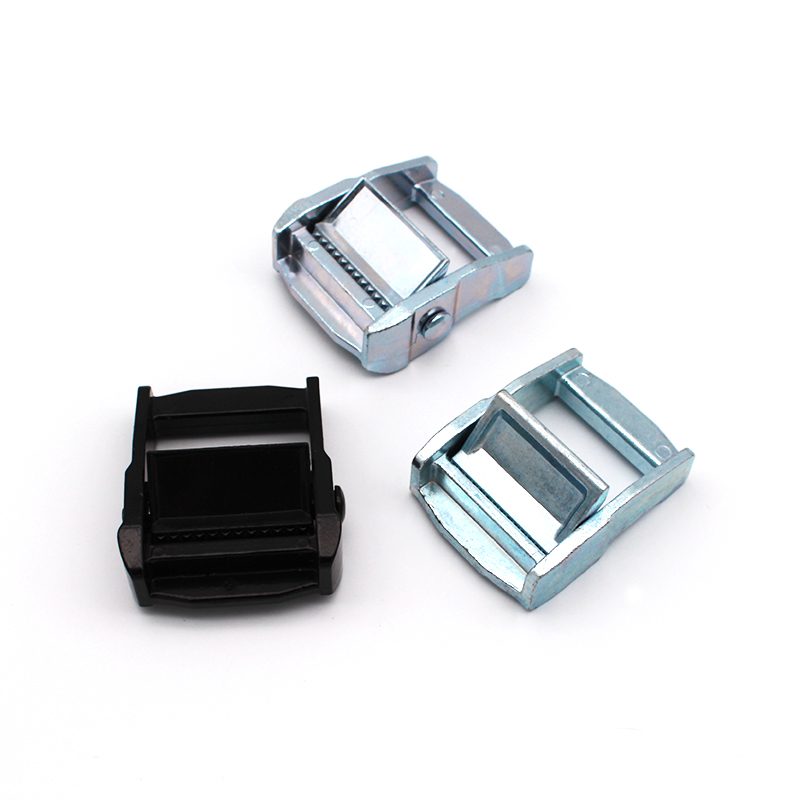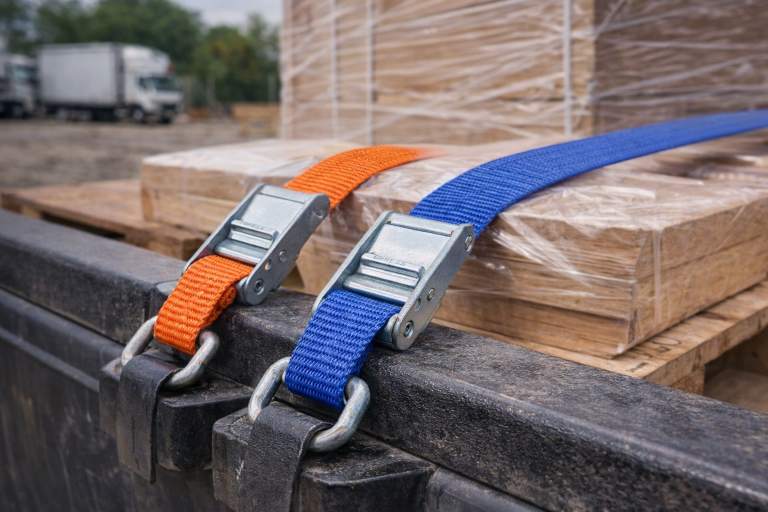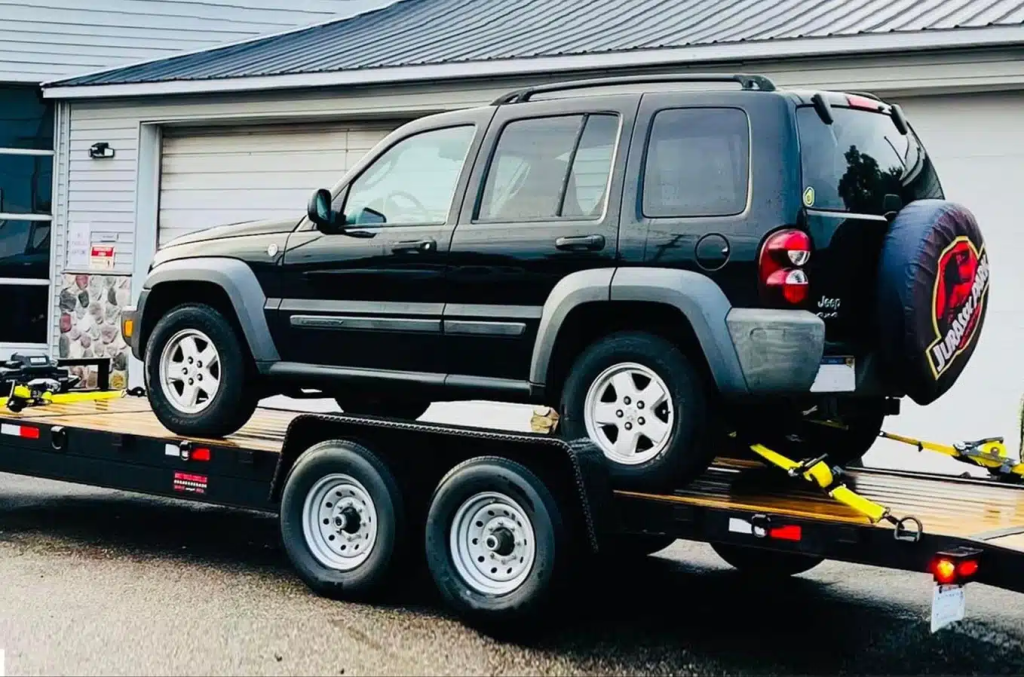
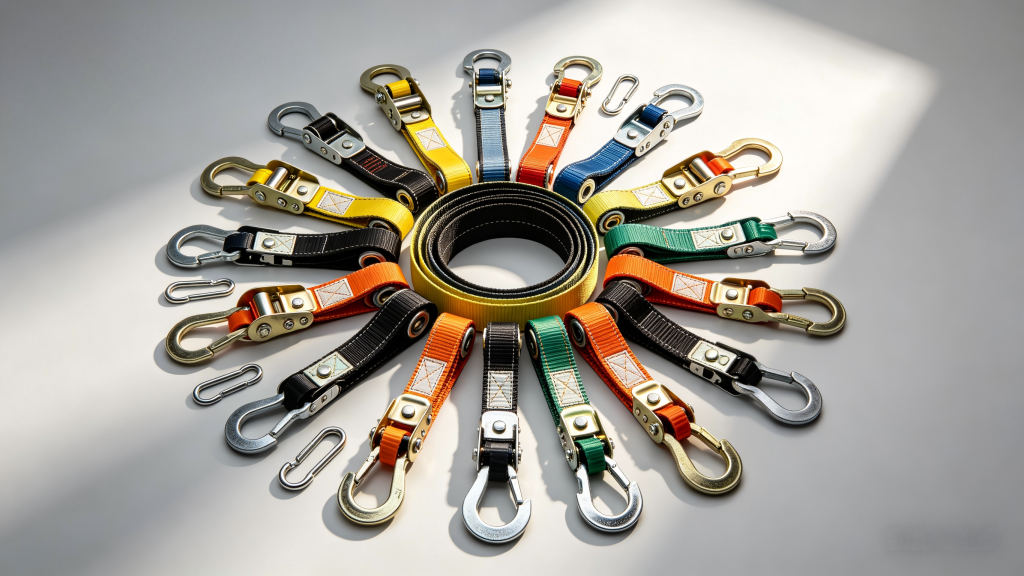
Double j-hooks, wire hooks, S-hooks, flat hooks, snap hooks, clevis grab hooks, and clevis slip hooks form the core family of tie down hook j-hooks. Adjacent styles such as R-hooks and T-hooks often appear in the same catalogs, and buyers compare them side by side, since each design suits a different anchor point and load.
The stakes are practical. A hook that misses the anchor point wastes time on the dock, and one that cannot carry the load creates a real safety risk. BAOYING’s hook fittings take this further, applying zinc anti-corrosion coating across the range for resistance to wear, salt spray, and vibration, and the same catalog covers ratchet buckles, cam buckles, over center buckles, and complete tie down straps for OEM and ODM orders. This guide explains the best uses, advantages, and limitations of each hook style, and how to match a tie-down hook to the job.
Key Takeaways
- Match the hook shape to your anchor point for a safe and secure hold.
- Always check the working load limit on the hook and never exceed it.
- Inspect hooks before each use and remove any damaged hook from service.
- Choose the right hook for the job: grab hooks hold chain, slip hooks let chain slide.
- Consult a supplier or manufacturer to confirm hook and strap compatibility.
Types of Tie Down Hooks: The J-Hook Family
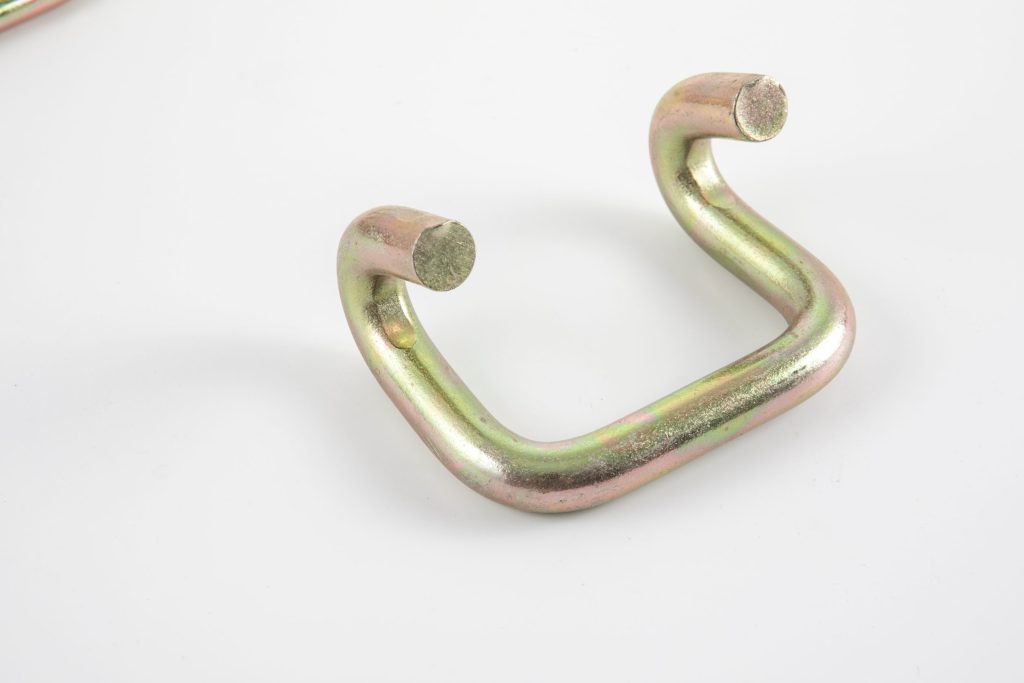
The J-hook family covers several tie-down hook styles that share one trait: a curved throat that catches an anchor point. Buyers meet these hook types on flatbeds, utility trailers, and cargo vans. Each design solves a different gripping problem.
Double J-Hooks and Wire Hooks
A double j-hook forms two opposing curves, so the hook cradles a rail or hole from both sides. Suppliers often catalog wire hooks as double-J hooks because of that curved shape. The narrow wire body slips into tight frame holes and stake pockets. A deeper jj-hook profile adds reach for recessed anchors.
Capacity tracks size and material. A 1-inch zinc-yellow double j wire hook carries 1,000 lb. A 2-inch 10M version reaches 3,333 lb. A 2-inch 11M long neck model rates 3,667 lb. These tiedown hooks suit flatbed rails, D-ring tabs, and trailer frames.
| Double J Wire Hook Size / Material | Working Load Limit |
|---|---|
| 1 inch, zinc-yellow or vinyl coated | 1,000 lb |
| 1.5 inch 4M, zinc-yellow | 1,333 lb |
| 2 inch 5M, vinyl coated | 1,667 lb |
| 2 inch 8M, 304 stainless steel | 2,933 lb |
| 2 inch 10M, zinc-yellow | 3,333 lb |
| 2 inch 11M long neck, zinc-yellow | 3,667 lb |
S-Hooks and Flat Hooks
An open s-hook clips onto almost any rated anchor point with little fuss. That flexibility makes it a common choice for light loads at or below 1,000 lb. The open throat also releases easily, so it fits temporary jobs better than permanent ones.
Flat hooks grip broad anchor points. A flat hook seats between the two metal strips of a flatbed rub rail, not on the outer edge. Wide contact spreads force across the rail. The trade-off: a flat hook needs open space to clamp. Limited clearance around the anchor point makes the fit awkward.
Snap, Clevis Grab, and Clevis Slip Hooks
Snap Hooks
A snap hook closes its throat with a spring-loaded gate. The gate keeps the hook on the anchor point during vibration and slack. One hand opens the gate, so drivers save time at every stop. Snap hooks work well on D-rings, tow loops, and vehicle tie-down points.
Load ratings vary by system. A roll back tie-down system with snap hook ends carries a working load limit of 2,000 lb. A car tie-down with a flat snap hook ratchet reaches a safe working load of 3,300 lbs and meets or exceeds DOT specifications. These tiedown hooks suit car hauling and light recovery work.
Clevis Grab vs. Clevis Slip
A clevis grab hook and a clevis slip hook both mount to chain through a clevis pin. They differ in chain behavior. A clevis grab hook has a narrow throat. It grabs a chain link and holds it, so the chain length stays fixed. A clevis slip hook has a wide, rounded throat. It lets the chain slide through, so the hook self-centers under load.
Both hook styles serve distinct jobs. A clevis grab hook suits load binding and chain shortening. A clevis slip hook suits towing and winching, where the chain must move. Neither design is superior. The task decides the fit.
| Hook Type | Working Load Limit | Grade | Part No. |
|---|---|---|---|
| Clevis Slip Hook | 14,200 lbs | Grade 63 | M910A |
| Clevis Grab Hook | 12,000 lbs | Transport Grade | M808A |
Shoppers also meet chain extensions and swan hooks in the same catalogs. Chain extensions add reach between a tiedown hook and the anchor. Swan hooks bend like a J and grip round rails. A wholesale supplier or manufacturer can confirm which grab hooks pair with a given chain grade.
Matching Hook Types to Anchor Points
A hook only works when its shape fits the anchor. Matching hook types to anchor points comes down to two questions: what does the anchor look like, and how much load must it hold? The answers point to one or two designs, not a whole catalog.
Frame Holes, Stake Pockets, and D-Rings
J-hooks slip directly into tie-down holes along a vehicle’s frame. That fit suits flatbeds, trailers, and heavy equipment, where the frame offers a row of ready-made slots. The curved throat drops in, and the load pulls the hook tight against the steel.
R-hooks and T-hooks serve similar vehicle fitment jobs. An R-hook twists 90 degrees to seat its larger end inside a recessed hole. A T-hook slides into a track or slot and locks crosswise. Both styles appear on car hauling and rail applications, and both demand the correct hole size.
Stake pockets accept flat hooks and wide-throat designs. D-rings take snap hooks, S-hooks, and jj-hooks with a closed gate. A driver should test the fit by hand before loading. A hook that rattles in the anchor will shift under vibration.
Some surfaces resist metal hooks entirely. A magnetic hook anchors to steel body panels and smooth frames where no hole exists. A magnetic hook works best for light loads and temporary routing. Soft loops wrap around bars, forks, or tubular frames that offer no edge for a metal throat. Soft loops protect painted and polished surfaces, and soft loops also reduce abrasion on the strap eye. These hook styles fill gaps that frame holes cannot.
Straps, Chains, and Rope Systems
The strap or chain behind the hook sets the load ceiling. A hook must meet or exceed the working load limit of its assembly. A Grade 70 V-chain assembly shows how the parts work together. The 5/16 inch, 2 ft low-profile unit weighs 16 lb and rates 5,400 lb at a 60-degree angle. Its 15-inch J-hook ends seat in frame holes. The maker warns against overhead lifting, so the assembly stays a tie-down tool.
| Specification | Value |
|---|---|
| Size | 5/16 inch |
| Length | 2 ft |
| Weight | 16 lb |
| Working Load Limit at 60 Degrees | 5,400 lb |
| Chain Grade | Grade 70 |
| Hook Type | 15 Inch J Hook / Compact J Hook |
| Approved for Overhead Lifting | No |
Webbed straps pair with wire hooks, flat hooks, and snap hooks. A wholesale supplier can match tiedown hook ends to a buyer’s anchor pattern. Rope systems usually take S-hooks or snap hooks with a smooth throat, since rope fibers wear against sharp edges.
How to Choose the Right J-Hooks
Working Load Limit and Materials
Anchor point first, then load. A buyer who starts with the hook shape often ends up with a poor fit. Once the anchor type is clear, confirm the working load limit stamped on the hook or listed by the maker. Never estimate a rating from appearance. Material and finish come next. Zinc coating resists corrosion, and stainless steel suits wet or coastal work.
Safety Checks and Compliance
Inspect hooks before each use. Look for bends, cracks, deep wear at the throat, and rust that pits the surface. A deformed hook has lost capacity and should leave service. Follow the manufacturer’s stated working load limit and any markings on the assembly. Keep records of inspections for fleet and commercial use.
How to Choose the Right J-Hooks
Working Load Limit and Materials
Picking tie down hook j-hooks starts with the anchor point, not the hook shape. A buyer who starts with shape often ends up with a poor fit. Once the anchor type is clear, check the working load limit stamped on the hook or listed by the maker. Material and finish come next.
| Material / Finish | Recommended Environment & Use |
|---|---|
| Pregalvanized Steel | Standard indoor environments; moderate corrosion resistance for most commercial spaces |
| Yellow Zinc-Coated Steel | Clean, dry indoor environments with minimal exposure and moderate durability demands |
| 316 Stainless Steel | Harsh, damp, chemical, or coastal environments; food-grade facilities, mechanical rooms, wash-down areas, outdoor installations |
| Plastic / Nylon | Sensitive limited-energy systems or EMI-prone zones; not for high-heat or heavy cable loads |
| Painted J Hooks | Visual identification and pathway color-coding; organizing cable types, service groups, or tenant-specific routes |
A wholesale supplier can confirm which tiedown hooks pair with a given strap or chain. Every tiedown hook must carry a rating you can read. The weakest part sets the limit for the whole assembly.
Safety Checks and Compliance
Inspect each hook before every use. Follow these steps:
- Center the load in the bowl of the hook — never tip-load or side-load it.
- Identify the Working Load Limit (WLL) before lifting and never exceed it.
- Do not use a hook that appears deformed or stretched.
- Never heat, weld, or reshape the bend of the hook.
- Do not use a hook with nicks, wear, cracks, or gouges.
- Ensure the user is trained to inspect the hook each day before use and when service conditions warrant it.
Check the contact surface for flattening or worn-thin sections. Confirm the lip and cradle show no bending, mushrooming, or sharp burrs. A damaged tiedown hook leaves service right away.
Compliance rests on a few rules. The anchor point WLL governs the assembly. Inspect anchor rings and stake pockets for cracks, bends, and corrosion; rings with cross-section reduced by more than 15% must not be used. Re-check securement at the 50-mile mark and periodically under §392.9. Fleet managers should review tiedown hooks alongside anchor condition.
The anchor point and the load decide the hook, not the other way around. A J-hook works well for frame holes and general recovery jobs. T-hooks and R-hooks fit factory slots on newer vehicles. No single tiedown hook fits every vehicle, so operators should match the style to each job.
Readers should check the working load limit on every hook and inspect each piece before use. A hook that is bent or worn should be taken out of service.
Pick the hook that fits the task. When you are not sure, check with the strap or chain manufacturer to confirm it works together. A wholesale supplier can also confirm which tiedown hooks pair with a given assembly.
FAQ
What is the difference between a J-hook and an S-hook?
A J-hook has one curved throat and a straight shank. An S-hook curves at both ends. The J-hook seats in frame holes and stays put under load. The S-hook clips onto many anchors and releases fast, which suits light, temporary jobs.
Can a double J-hook replace a flat hook?
Not always. A double J-hook slips into holes and narrow slots. A flat hook seats between the metal strips of a rub rail and spreads force across a wide face. The anchor shape decides. A wholesale supplier can confirm which end fits a given trailer.
How do I know which hook fits my trailer?
Check the anchor first. Frame holes take J-hooks, R-hooks, or T-hooks. Rub rails take flat hooks. D-rings take snap hooks or S-hooks. Then confirm the hook rating meets the strap or chain rating. A factory can build custom ends for unusual anchor patterns.
Do clevis grab hooks and clevis slip hooks do the same job?
No. A clevis grab hook holds a chain link, so the length stays fixed. A clevis slip hook lets the chain slide, so the hook centers under load. Load binding favors the grab style. Towing and winching favor the slip style.
How often should I inspect a tie-down hook?
Inspect before every use. Look for bends, cracks, deep throat wear, and pitting rust. Re-check securement at the 50-mile mark. Retire any hook with a cross-section reduced by more than 15%. A manufacturer’s stated working load limit governs the assembly.