Webbing width and component quality directly determine the securing capacity of cam buckle straps. Standard 1-inch cam buckle straps can reliably withstand a Working Load Limit (WLL) of 500 lbs and a breaking strength of 1,500 lbs, whereas heavy-duty 2-inch models offer a WLL of 1,000 lbs and a breaking strength of 3,000 lbs.
Key Takeaways
- The width of the strap determines the maximum load capacity.
- Standard straps can safely secure loads weighing between 500 and 1,000 pounds.
- Manually tightened cam buckles help protect fragile cargo.
- They prevent damage caused by crushing, such as to kayaks or bicycles.
- Proper threading ensures optimal securing performance.
- A straight-line pulling angle ensures the safety of the cargo.
Strength Ratings for Cam Buckle Straps
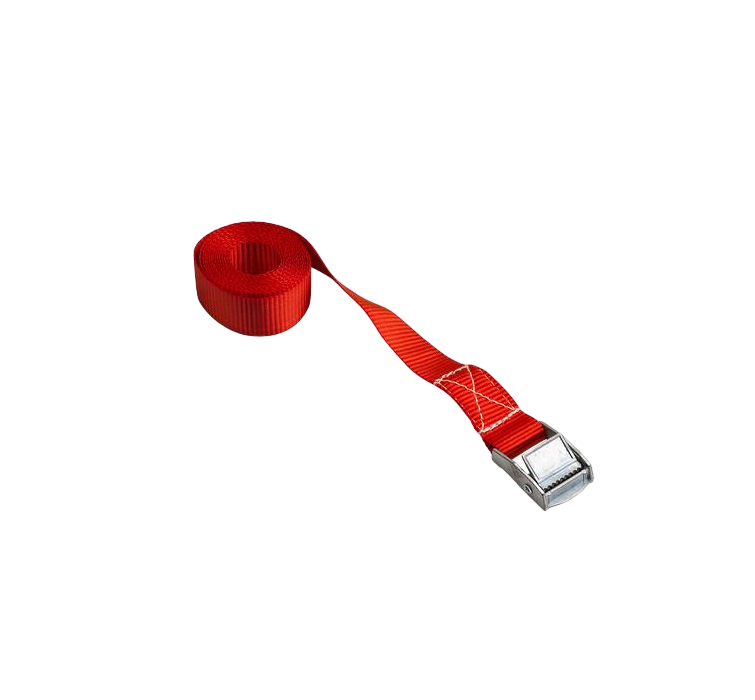
Rated specifications help drivers secure cargo safely. Test data accurately reflects a strap’s load-bearing capacity; never estimate strength based solely on appearance—instead, select straps based on actual load limits.
Cam Buckle Straps: Working Load Limit and Breaking Strength
There are two primary metrics for measuring strap strength: Working Load Limit (WLL) and Breaking Strength (BS).
Cargo straps require a 3:1 safety factor. This safety margin absorbs the impact forces generated by sudden stops or vehicle jolts, preventing the strap from breaking.
| Regulatory Dimension | WSTDA T-1 Specification Standard |
|---|---|
| Core Rating Metric | Uses WLL numbers to set safe maximum daily loads. |
| Safety Margin Ratio | Requires a 3:1 safety gap for load shifts. |
| Marking Requirements | Requires clear tags showing WLL, strength, and maker info. |
A full tie-down strap uses four main parts:
- Strong synthetic webbing fabric
- Metal buckle teeth with springs
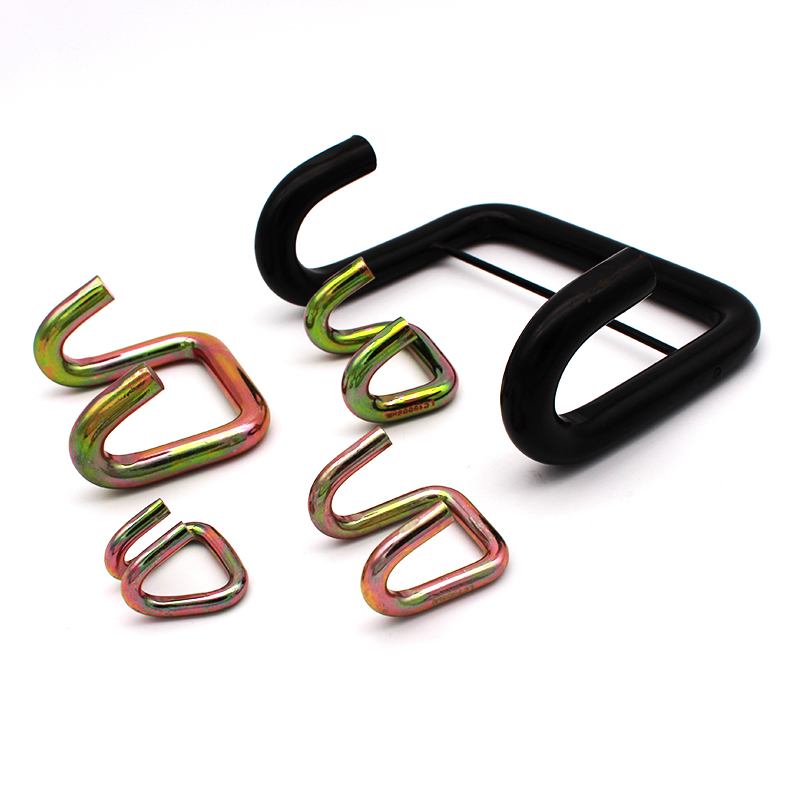
- End hooks like S-hooks
- Strong sewn thread box patterns
The strength of an entire strap system depends on its weakest link; even if the webbing itself is extremely strong, the system will fail if a hook breaks.
Load-bearing capacity based on strap width
Strap width affects load-bearing limits. Wider straps offer superior tension retention and are manufactured using thicker yarns. Buyers can select the appropriate strap specifications based on their specific cargo transport requirements.
| Strap Dimension | Webbing Width | Load Capacity Range (WLL) | Ultimate Breaking Strength |
|---|---|---|---|
| 1-Inch Strap | 25 mm | 300 to 500 lbs | 800 to 1,500 lbs |
| 1.5-Inch Strap | 38 mm | 500 to 800 lbs | 1,500 to 2,500 lbs |
| 2-Inch Strap | 50 mm | 800 to 1,300 lbs | 2,500 to 4,000 lbs |
Small 1-inch straps are designed for securing lightweight gear and are commonly used for transporting kayaks. These standard straps have a Working Load Limit (WLL) of 500 lbs and a breaking strength of 1,500 lbs.
Medium-sized 1.5-inch straps are used to secure mid-sized items; for instance, delivery personnel frequently use them to secure large furniture. They feature a Working Load Limit of 800 lbs and a breaking strength of 2,500 lbs.
Large 2-inch straps offer the highest level of securing capability and are often used in industrial settings to secure large palletized loads. Specialized 2-inch straps can handle a Working Load Limit of up to 1,467 lbs per strap. Rigorous factory testing ensures that the high-strength polyester webbing remains secure under heavy loads without stretching or deforming.
Cam Buckle Straps vs Ratchet Straps
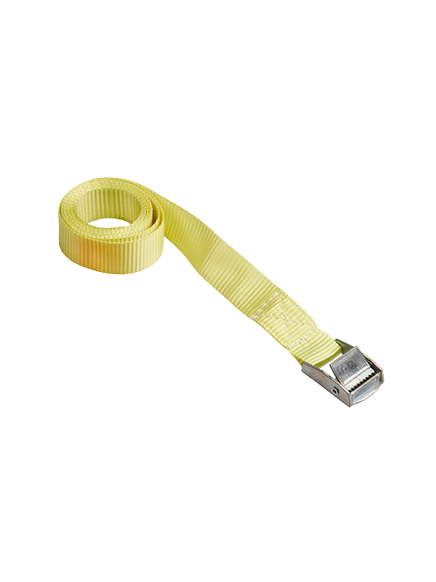
Cargo tools meet distinct haul needs. Workers pick straps by design and load type.
Working Principles of Spring-Loaded Cam Buckle Straps
The difference between these two systems lies in the mechanical principles employed.
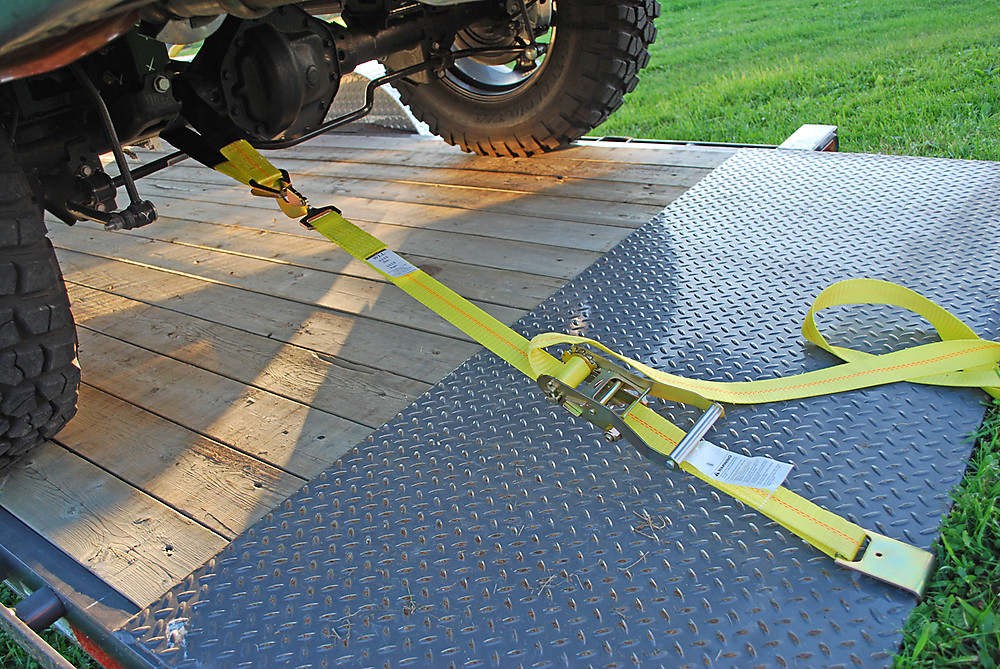
Ratchet straps utilize a gear mechanism: the user operates a handle to multiply force, allowing the gears to generate immense clamping pressure.
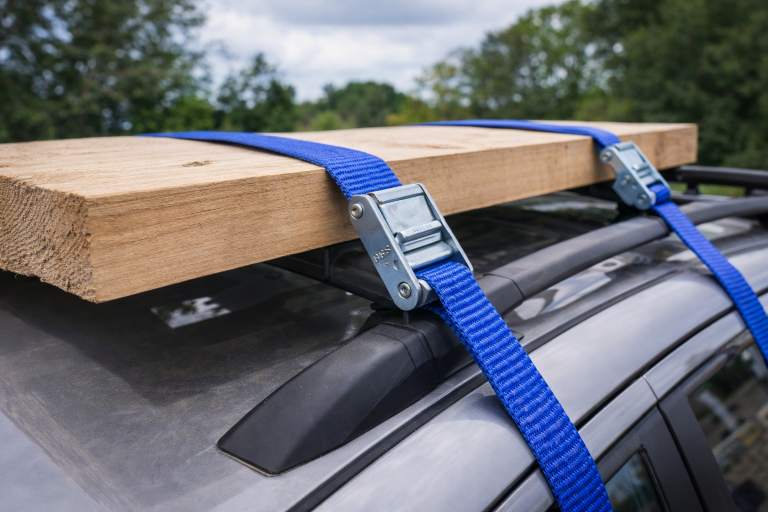
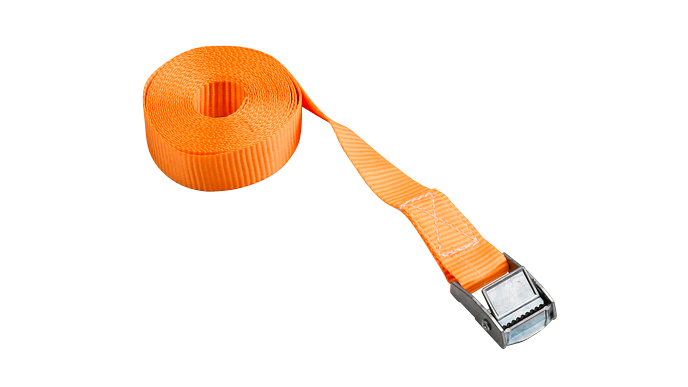
Cam buckle straps, on the other hand, rely on manual pulling: the user pulls the end of the strap to tighten the loop, while a spring inside the buckle quickly grips the webbing.
- Initial Spring Engagement: Buckle springs press teeth down. Teeth pinch webbing to frames.
- Friction Generation: Ridged teeth touch webbing fabric. Friction stops movement quickly.
- Self-Locking Under Tension: Cargo tension pulls straps back. Buckle cams turn down harder. Teeth bite polyester webbing tighter.
Manual Tensioning and Preventing Cargo Damage
Manual operation helps protect fragile cargo. Ratchet mechanisms generate powerful clamping forces; excessive force can crush metal frames or cause damage to boats and plastic components.
Using manual straps avoids these risks. The operator can simply stop pulling once the strap is snug. This manual control effectively protects fragile cargo, such as:
- Kayaks on top racks
- Bikes on rear mounts
- Small tools on trailers
Sellers build straps for quick transport. Users shield gear without damage.
Factors Affecting Strap Holding Power
Damage, weather, and bad setups change total capacity. Drivers must check gear before trips. This keeps cargo very safe.
Webbing Quality and Wear Factors
Sunlight and rub wear damage soft fibers slowly. Solar rays ruin basic straps fast.
- Unstabilized Polyester Webbing: Solar rays cut strength in half yearly.
- UV-Stabilized Webbing: Loss stays below a quarter per year.
- Sharp edges cut outer webbing threads quickly. Frayed cloth lowers overall strength. Metal corners need soft pads to block cuts.
Tip: Water and salt rust cheap metal parts fast. Rust hurts springs and ruins safety.
Proper Threading and Angle of Pull
Wrong threading drops holding power fast. Users push webbing into bottom buckle slots. Spring teeth must bite the cloth directly. Backward pathing lets straps slip out during trips.
Pull angles shift actual load capacity. Straight 90-degree angles give full hold power. Angled setups boost strain on buckle parts.
| Pull Angle relative to Surface | Retained Load Capacity Percentage |
|---|---|
| 90 Degrees (Vertical Straight) | 100% Full Capacity |
| 45 Degrees (Angled Tie-Down) | ~70% Retained Capacity |
| 30 Degrees (Low Flat Angle) | ~50% Retained Capacity |
Right use keeps tension steady without slipping. Straight lines keep safety high on long trips.
FAQ
Can cam buckle straps secure heavy machinery?
No. These straps are suitable only for light loads; large machinery requires higher-strength ratchet straps. Using products from certified manufacturers ensures transport safety.
How should dirty webbing be cleaned?
Clean the polyester webbing using mild soap and warm water. After cleaning, allow it to air dry away from direct sunlight, as UV exposure can weaken the webbing fibers.
Can custom cam buckle straps withstand outdoor rain?
Straps produced by high-quality manufacturers are weather-resistant. A durable galvanized coating prevents the buckles from rusting, while specially treated polyester material effectively resists moisture damage.