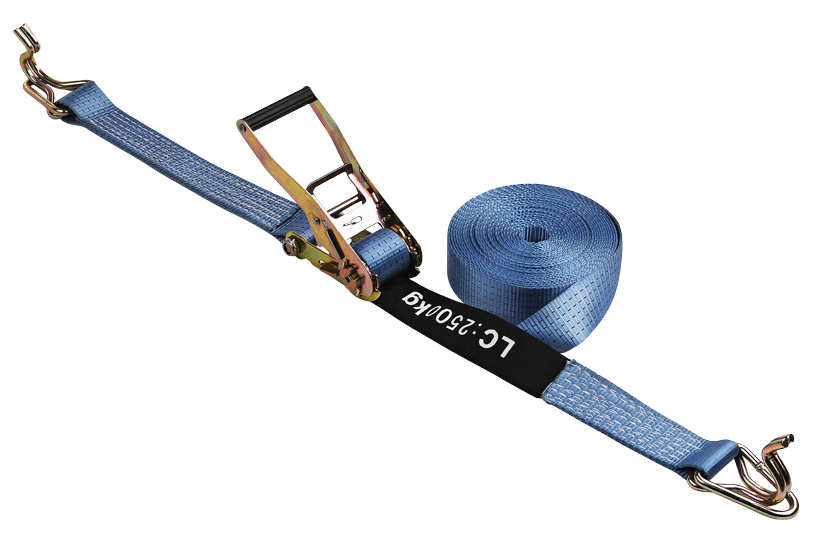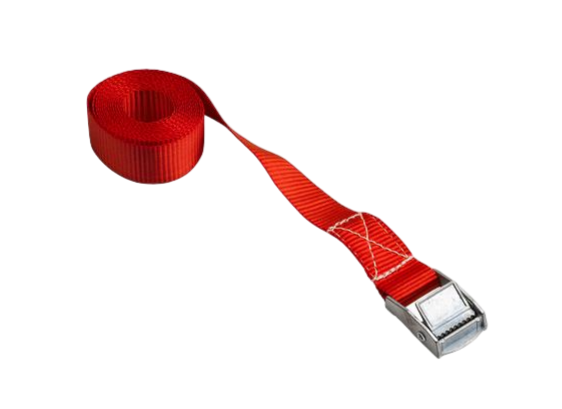
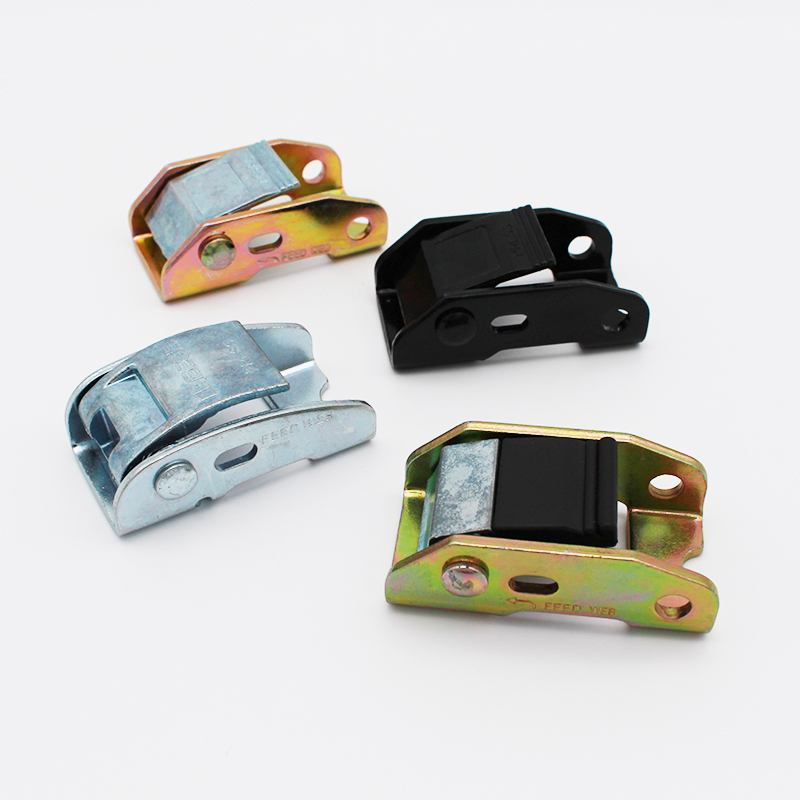
Cam buckles allow riders to tighten the straps by hand. Motorcycle ratchet straps use levers to pull the straps very tight. Choosing the right strapping system is crucial for safety. You need to secure your motorcycle correctly. The right tools ensure your motorcycle is safe and secure on every trip. Riders use these straps to prevent the motorcycle from moving or getting injured. A secure hold gives you peace of mind on the road.
Key Takeaways
- Cam buckle straps are suitable for lighter motorcycles. They are easy and quick to install and prevent you from pulling the straps too tight, thus protecting the motorcycle frame.
- Ratchet straps can withstand greater weight and are suitable for heavy motorcycles. They hold the motorcycle firmly in place. Use them with extreme care, or you may damage your motorcycle.
- Before using straps, always check their condition to ensure they are not damaged or worn. This helps ensure safety when moving your motorcycle.
- Using four straps can keep your motorcycle stable. This prevents your motorcycle from slipping on the road.
- Choose the appropriate straps based on the length of your trip. Cam buckles are suitable for short trips, while ratchet straps are better suited for long trips.
What Is a Cam Buckle?
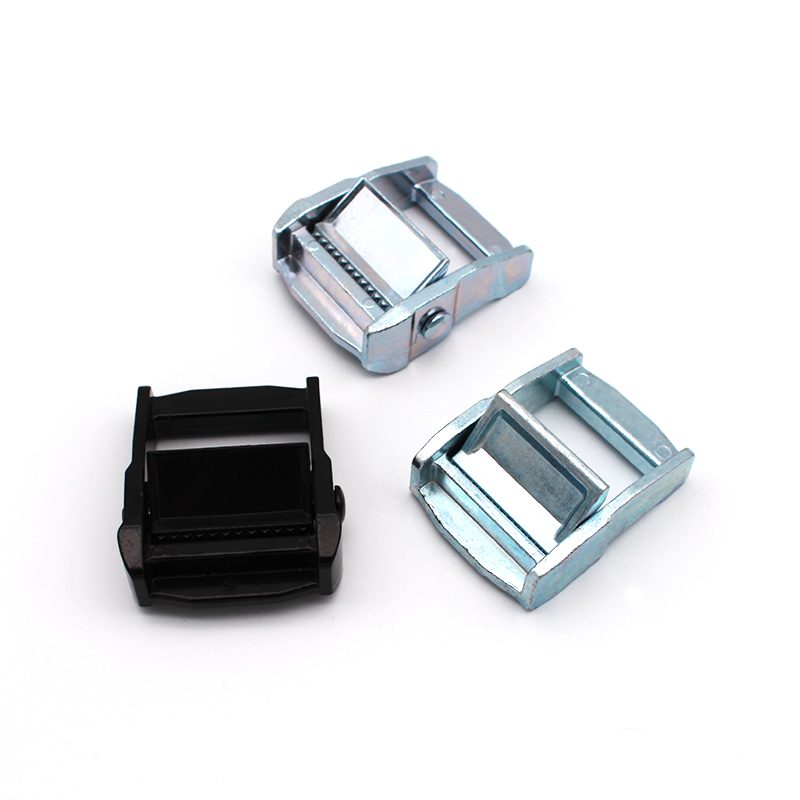
Bao Ying is a leading manufacturer of cam buckle straps. They are dedicated to producing robust, durable, and easy-to-use products. Their cam buckle straps help riders ensure motorcycle safety. Bao Ying uses advanced production equipment and maintains strict quality control. This means their products perform well in many situations.
How Cam Buckle Straps Work
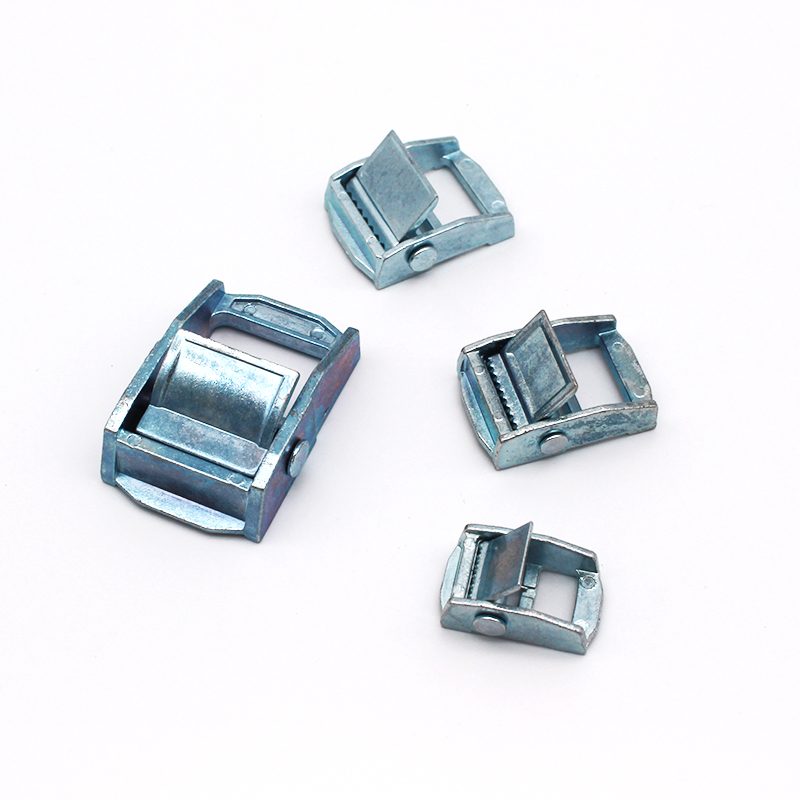
Cam buckle straps are designed for simplicity and efficiency. Riders simply thread the strap through the cam buckle. Inside the cam buckle is a spring-loaded lever that securely holds the strap in place. This makes tightening and loosening the strap effortless. Riders can manually adjust the strap’s tightness to prevent it from becoming too tight. Cam buckle straps are available in sizes such as 1 inch and 2 inches. These straps are suitable for securing lightweight and fragile items. Many riders use cam buckle straps in conjunction with S-hooks, wire hooks, or spring hooks. Therefore, many people choose to use cam buckle straps to secure motorcycles and other recreational vehicles.
Key Features of Motorcycle Binding Straps
Baoying cam-buckle binding straps possess several special features that make them ideal for moving motorcycles. The buckles are made of strong metals such as zinc and stainless steel, which will not rust and are durable. The binding straps are made of tough polyester fiber and will not be damaged by sun exposure, water immersion, or frequent use.
Motorcycle soft binding straps distribute weight and tension, effectively preventing damage to the frame or body. Cam-buckle binding straps prevent excessive force, ensuring your motorcycle is securely secured. Riders can use these binding straps outdoors or near water.
What Is a Ratchet Strap?
How Ratchet Straps Work
Ratchet straps help riders secure heavy loads. These straps use a special ratchet mechanism. The rider passes the strap through the ratchet mechanism. Moving the ratchet handle up and down tightens the strap, locking it and preventing slippage. To loosen the strap, simply fully open the ratchet. This allows the strap to release quickly.
Ratchet straps are ideal for moving motorcycles. They help maintain stability while riding. Ratchet straps have a much higher tensile strength than cam-buckle straps. Therefore, they are often used on large motorcycles or for long-distance touring.
Key Features of Motorcycle Straps
The many features of ratchet straps make them ideal for motorcycles. Most ratchet straps are made of polyester webbing. This material is very strong and not easily stretched. It will not be damaged by sunlight, water, or friction. Some straps are made of nylon. Nylon has better flexibility and helps to cope with bumps.
| Feature | Description |
|---|---|
| High Strength | Polyester is very strong and good for heavy jobs. |
| Low Stretch | It does not stretch much, so the strap stays tight. |
| Weather Resistance | It does not get ruined by sun, water, or chemicals. |
| Abrasion Resistance | It does not wear out fast from rubbing. |
Ratchet straps prevent motorcycles from slipping during long trips. Riders should choose appropriate straps, tighten them, and check them frequently. After riding a few miles, check the straps again to ensure the motorcycle is secure.
Cam Buckle Straps vs. Ratchet Straps: Key Differences
Strength and Load Capacity
The main difference between cam buckle and ratchet straps lies in their strength and load capacity. Riders typically choose cam buckle straps for lighter motorcycles, such as motocross bikes or scooters. These straps are best suited for loads that don’t require extremely high tension. Cam buckle straps may slip if not tightened enough, but they hold quickly and won’t damage the suspension system.
Ratchet straps are much stronger. They can secure heavy motorcycles and withstand long trips. A pair of ratchet straps can support over 5,000 pounds (approximately 2272 kg). This extra tension provides greater security, but if tightened too much, it can also compress the suspension system.
Industry standards state that ratchet straps offer the highest tension, making them ideal for securing heavy loads. Cam buckles are better suited for securing fragile items because they prevent over-tightening. Riders typically use cam buckles to secure fragile items, while ratchet-type straps are suitable for situations requiring maximum tension.
Ease of Use and Speed
Ease of use and speed are crucial when securing motorcycles. Many riders look for a time- and effortless strapping system. Cam buckle straps stand out due to their simple design. Riders can use them quickly and adjust the tension manually, making them popular for fast strapping.
Ratchet-type straps require more time and skill. The ratchet mechanism requires multiple steps to tighten and loosen, which can slow down loading and unloading.
Cam-type straps offer significant advantages in terms of convenience and speed. For riders who want to quickly and easily secure their motorcycles, cam-type straps are often the preferred choice for short trips or frequent stops.
Safety and Overtightening Risk
Safety is a top concern for every motorcycle owner. Overtightening is a common risk with ratchet straps. Ratchet mechanisms can apply considerable force, which can sometimes lead to damage, such as damaged fork oil seals or suspension malfunctions. Some riders have experienced oil leaks and brake problems after using overtight straps.
Cam-type straps rely on manual force, which reduces the risk of overtightening. Riders using cam-type straps can avoid motorcycle damage, especially for delicate or expensive motorcycles. A strapping system should always protect the motorcycle, not damage it.
Cost and Availability
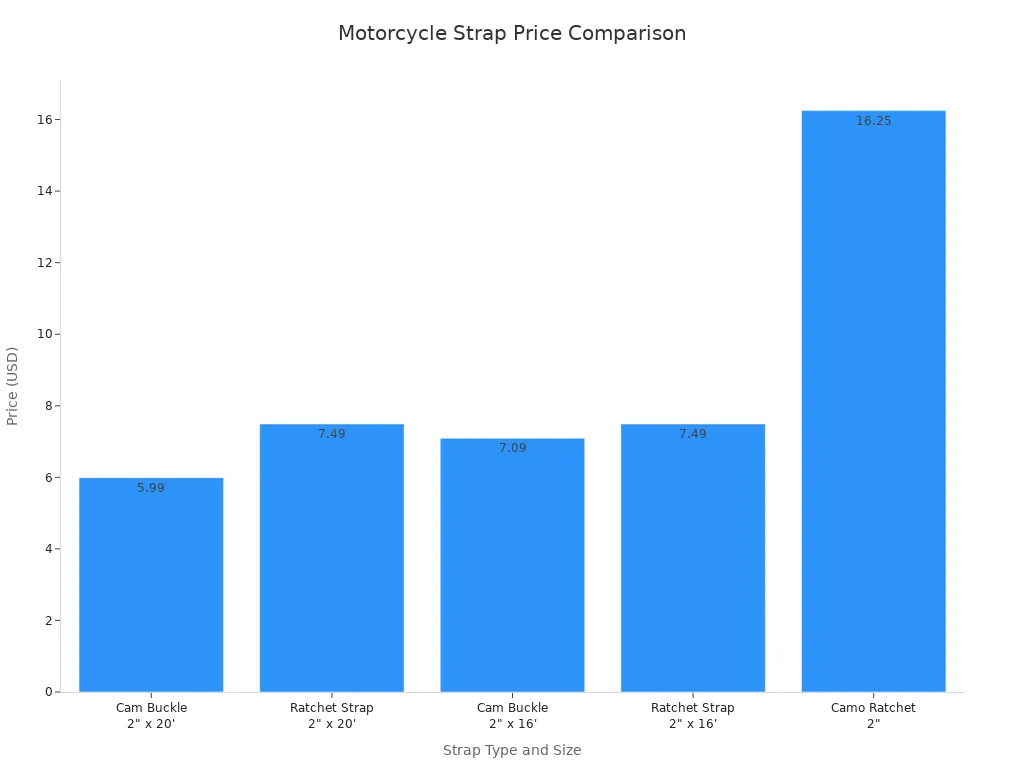
Cost and availability play a significant role when choosing a strapping system. Cam-type straps are generally cheaper than ratchet straps. For example, a 2-inch x 20-foot cam buckle strap might cost $5.99, while a similar ratchet strap would cost $7.49. Special ratchet straps, such as camouflage ones, could be even more expensive.
| Strap Type | Size | Price |
|---|---|---|
| Cam Buckle Strap | 2″ x 20′ | $5.99 |
| Ratchet Strap | 2″ x 20′ | $7.49 |
| Cam Buckle Strap | 2″ x 16′ | $7.09 |
| Ratchet Strap | 2″ x 16′ | $7.49 |
| Camo Ratchet Strap | 2″ | $16.25 |
Both types of cam buckle lashing straps are readily available in stores and online. Cam buckle lashing straps are available in many lengths, such as 6 feet, 10 feet, and 16 feet. Heavy-duty cam buckle lashing straps are also available to meet special needs. Most ratchet lashing straps have high rated load capacity and working load limits, making them a popular choice for heavy-duty lashing straps.
Motorcycle Lashing Straps: Advantages and Disadvantages
Cam Buckle Lashing Straps: Advantages and Disadvantages
Many riders choose cam buckle lashing straps because of their ease of use. This type of lashing strap allows for quick securing of motorcycles and rapid adjustment of tightness. Cam buckle lashing straps have a wide range of uses beyond motorcycles. Please see the table below for their advantages and disadvantages:
| Advantages | Disadvantages |
|---|---|
| Simple & Effective | Potential wear over time |
| Easy to attach and adjust | Need for proper attachment points |
| Versatile for different uses |
Cam-type straps prevent excessive force, protecting the bicycle’s frame and suspension. Riders report that these straps are easy to use even with gloves on. They also appreciate that they don’t scratch paint or chrome. However, if you use them frequently, you should check for damage. Always secure the straps in the correct position on your bicycle.
Ratchet Straps: Advantages and Disadvantages
Ratchet straps allow riders to control the tightness of the strap. The ratchet mechanism makes tightening the strap effortless. The table below lists its main advantages and disadvantages:
| Advantages of Ratchet Straps | Disadvantages of Ratchet Straps |
|---|---|
| User-friendly, less physical strength | Lower working load limits than chains |
| Controlled tensioning for safety | Vulnerable to cutting and abrasion |
| Gentle on cargo surfaces | Shorter lifespan than chain systems |
| Lightweight and easy to handle | Not for very sharp edges or heavy loads |
| Versatile for many load shapes | Can degrade from UV, chemicals, moisture |
Ratchet straps are ideal for heavy motorcycles and long-distance riding. Riders appreciate these straps because they hold the motorcycle firmly even on rough terrain. The ratchet system helps maintain the strap’s tautness. However, these straps can age due to sun exposure, chemicals, or sharp objects. Riders should regularly inspect ratchet straps and replace them if any damage is found.
When to Use Different Types of Straps
Based on Motorcycle Weight
Choosing the right strap depends on the weight of the motorcycle. Riders typically use cam buckles to secure lighter motorcycles, such as motocross, dual-purpose motorcycles, and scooters. Cam buckle straps provide sufficient tension to secure these motorcycles without compressing the suspension system. This helps prevent damage during transport. Cam buckles are ideal for transporting light to medium-sized motorcycles. They are easy to operate and protect the webbing from abrasion.
For heavier motorcycles, riders should use ratchet straps. The ratchet mechanism provides a more secure hold, which is crucial for bicycles weighing over 700 to 750 pounds.
Choosing the Right Tie-on Straps Based on Trip Distance
Trip distance also influences the choice of ties. Riders planning short trips or needing to move their motorcycles at low speeds can use cam-buckle ties. These ties are quick and easy to install and remove, ideal for fast work.
For long-distance transport or highway riding, ratchet ties offer extra safety. They keep the motorcycle stable on bumpy and rough roads. Riders planning long-distance motorcycle transport should choose ratchet ties for added safety.
Choosing Tie-on Straps Based on User Experience
Experience level is crucial when choosing ties. New motorcycle owners can find guides on how to use ties. Experts recommend using soft, loop-shaped ties to protect the motorcycle’s paint. They also recommend applying appropriate tension to avoid damaging the suspension system. Four-point ties offer the best stability.
Riders who prefer simple and quick ties often choose cam-buckle ties. These ties are ideal for users who value quick handling and easy adjustments. Experienced riders may prefer ratchet ties for securing heavy motorcycles or for long trips. They know how to use the ratchet mechanism safely and can make the most of each strap.
FAQ
What are the main differences between cam buckles and ratchet belts?
Cam buckles use hand force to tighten the strap. Ratchet belts use leverage to generate greater tension. Riders can choose according to the required pull.
Will cam buckle straps damage a motorcycle?
Cam buckle straps help prevent over-tightening, thus protecting the motorcycle’s frame and suspension system. Riders should always check the strap’s position to avoid scratches.
When should ratchet belts be used to secure a motorcycle?
Ratchet belts are best suited for heavy motorcycles or long-distance touring. They secure the motorcycle firmly during transport. Riders use them when extra safety is required.
Are BaoYing cam buckles suitable for outdoor use?
BaoYing cam buckles are made of zinc or stainless steel. These materials are rust-resistant and durable, lasting even outdoors or in wet conditions. Riders can rely on their reliability in a variety of environments.