Thread the webbing through the buckle, remove the slack, close the handle to lock tension, then lift the handle to release. If you want to know how to use over center tie down straps, the skill splits into three repeatable moves: correct threading, proper tension, and safe release. These straps use a lever-and-slot buckle that locks in one motion and holds through potholes and washboard roads, which is why haulers trust them for trucks, trailers, and boats. This walkthrough is written from hands-on rigging experience and pairs every step with the real hardware specs, so you can lash cargo with confidence. The over-center buckle sits at the core of a complete cargo-control system that also spans ratchet and cam styles.
What Are Over Center Buckle Tie Down Straps?
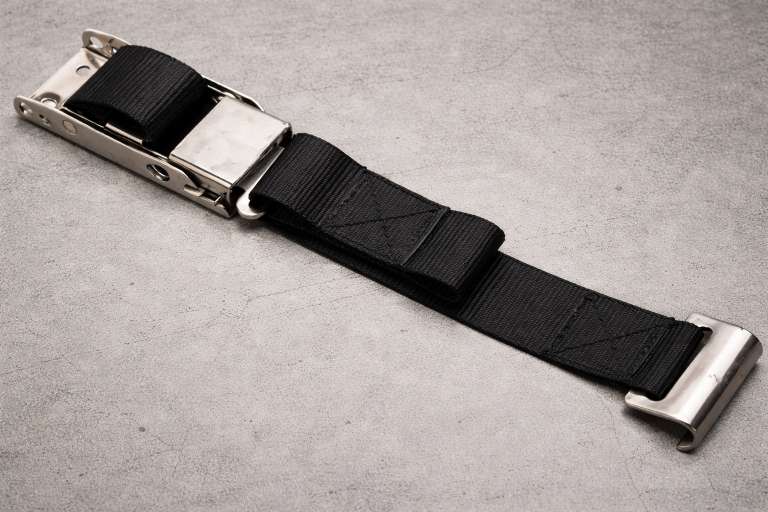
An over center buckle tie down strap is a cargo-control tool that uses a lever-based buckle to clamp webbing under tension. Instead of a gear or a cam, it has a handle that swings past a midpoint and locks. Once past center, the strap’s own tension holds the handle closed, so road vibration cannot easily pop it open. That self-locking action is why fleets choose it for construction equipment, heavy machinery, and long-term industrial fixation.
Parts of an Over Center Buckle Strap
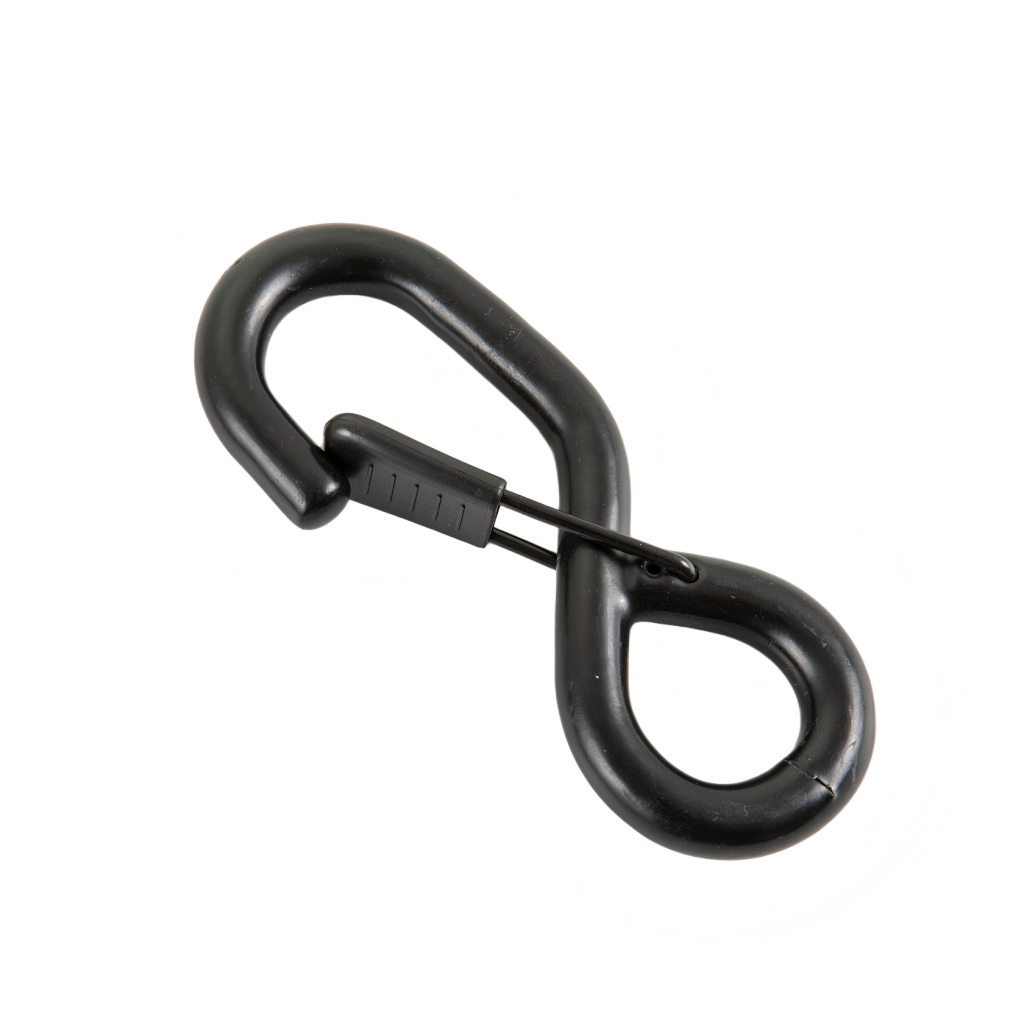
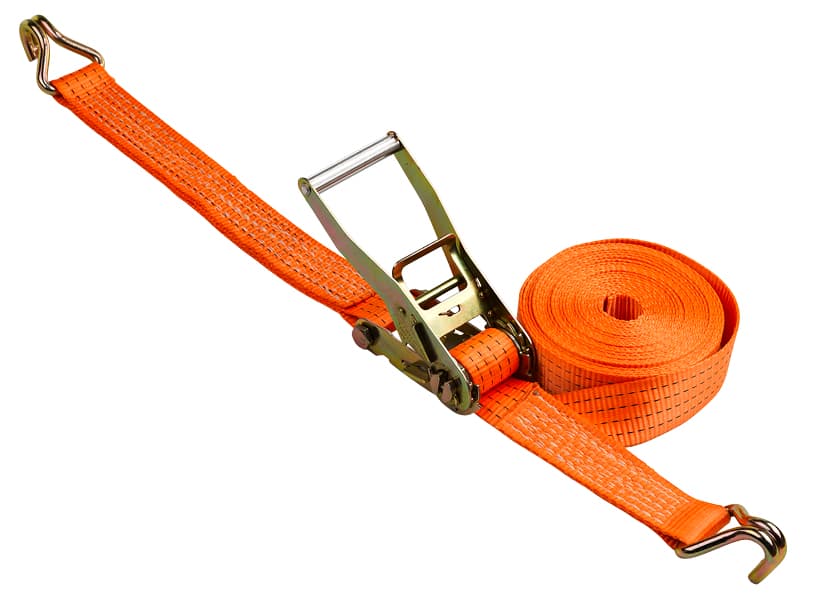
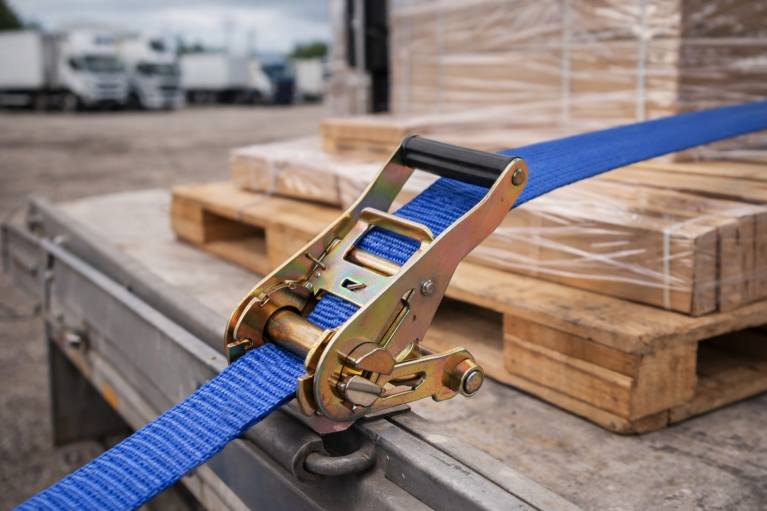
Every strap has four parts. The webbing is the flat polyester band that wraps the load. The over-center buckle holds the handle, the wire bale, and two threading slots. The wire bale is the metal loop that presses the webbing into the buckle. The hooks clip the ends to anchor points on the vehicle or trailer. BAOYING builds these with zinc anti-corrosion coated hardware, so the metal survives damp, salty conditions.
Load Ratings You Can Spec Against
Working load limits run from 500 to 10,000 lbs across the catalog. A common 1-inch strap holds about 1,000 lbs; a 2-inch strap handles roughly 3,000 lbs. Match the rating to the load – an oversized strap can crush fragile cargo, while an undersized one can fail mid-trip.
| Webbing width | Working load limit | Typical use |
| 1 inch | ~1,000 lbs | Kayaks, roof racks, light cargo |
| 2 inch | ~3,000 lbs | Furniture, ATV, general hauling |
| 3-4 inch | up to 10,000 lbs | Machinery, flatbed, industrial loads |
All webbing is high-tenacity polyester; hardware is zinc-coated; production follows ISO 9001 with CE and GS backing.
Why the Over-Center Design Holds Tension
When the handle closes, the linkage crosses a geometric center. In that position, strap tension pulls the handle toward closed, so vibration reinforces the lock instead of loosening it. A sharp impact could still drive some designs back across center, which is why separate safety catches matter – but for routine transport the buckle keeps its clamping force.
If you need maximum pull force rather than fast one-motion tension, ratchet straps pull webbing tighter through a gear mechanism and suit extra-heavy loads. Over-center and ratchet styles cover different jobs in the same cargo-control kit.
How to Thread Over Center Tie Down Straps Correctly
Threading decides how well the strap grips. The two-slot path is identical on every over-center buckle, so learn it once and it transfers across all widths and load ratings.
Position and Route the Webbing
1. Hold the buckle upright so the rivets point up, then swing the wire bale forward to open the internal pressure point.
2. Feed the strap from the rear into the lower slot and push enough webbing through to get a firm grip.
3. Pull it out the front, then bring the same end up and into the upper slot from the front, pushing it to the back.
4. Pull the tail until the webbing lies flat and untwisted against the buckle frame.
A twisted strap cuts contact area and slips under load, so keep the webbing flat across its full width. Flat routing also spreads force evenly and protects the hardware.
Remove Slack, Then Lock
With the handle still open, pull the loose end by hand to take up slack, then drape the cargo and snug it to the anchor. A hand pull is enough – contact pressure matters more than stretch. Pump the lever a few times to set the final tension, but stop once the load sits stable; over-tightening bends cardboard and cracks kayak hulls.
For fragile or lightweight gear, cam buckle straps tighten by hand without the multiplying force of a lever, which protects soft cargo from crush damage.
How to Tighten and Release Over Center Tie Down Straps Safely
Close the Handle to Lock Tension
Grip the handle and push it down firmly through its arc until it rests flat against the frame. A click means the latch seated; the webbing should feel rigid. Press the strap – a locked buckle bends only slightly. Road vibration then drives the handle deeper into the locked state, so the tension holds without constant input.
Lift the Handle to Release
Release reverses the motion. Lift the handle up and away from the frame; the linkage crosses back over center and the webbing goes slack. The handle may resist at first because tension holds it down – keep a steady grip and expect a small snap-back. Unhook one strap at a time and support any shifting cargo.
Mistakes to Avoid and Routine Inspection
· Twisted webbing: loses contact area and slips; check the full length before tensioning.
· Weak anchors: rusted loops or sharp edges cut straps; inspect hooks for cracks before every trip.
· Over-tightening: cracks kayak hulls and warps plastic; tension until the load sits stable, then stop.
· Skipped checks: re-tension at rest stops and replace frayed or sun-brittle webbing immediately.
Run your fingers along the strap before each trip and look for cuts, discoloration, or corrosion on the hardware. Clean, dry storage extends service life and keeps the release action smooth.
BAOYING runs an in-house workshop 18 km from Ningbo Beilun Port, with 100+ staff and 20+ technicians, and builds to ISO 9001 backed by CE and GS. The factory supports ODM/OEM customization – webbing color, logo, hardware shape, length, and width – plus wholesale supply for global distributors and trailer brands.